



TPD discharge for student loans is the federal total and permanent disability discharge available for qualifying student loans. Federal Student Aid processes the discharge, while Rocket Records helps with the medical documentation. We do not forgive loans.
This guide shows you precisely how TPD discharge works in 2026. You’ll learn the three qualification pathways, which loans get cancelled, and how to apply step by step.
We cover the monitoring period after approval, tax rules you need to know, and common mistakes that delay discharge. You’ll also see how Rocket Records helps you find this benefit alongside other disability programs you may qualify for.
Federal Student Aid decides. We document.
This guide shows you precisely how TPD discharge works in 2026. You’ll learn the three qualification pathways, which loans get cancelled, and how to apply step by step. We cover the monitoring period after approval, tax rules you need to know, and common mistakes that delay discharge.
You’ll also see how Rocket Records helps you find this benefit alongside other disability programs you may qualify for.
What TPD Means
TPD discharge is the federal total and permanent disability discharge for qualifying student loans. Federal Student Aid processes it. Rocket Records helps with the medical documentation. We do not forgive loans.
What FSA Reviews
Federal Student Aid decides who qualifies based on three pathways: Social Security disability benefits, VA disability ratings, or physician certification. Each pathway has specific documentation requirements. FSA verifies your disability status and approves or denies your discharge application. The process typically takes 60 to 90 days from submission.
What We Provide
Rocket Records helps you gather the medical documentation needed for your application. We organize your records, prepare forms, and track your monitoring period after discharge. We also connect you with other disability benefits you may qualify for alongside TPD discharge.
What Is TPD Discharge for Student Loans and How Does It Work?
TPD discharge for student loans is a federal program that cancels outstanding federal student loan balances for borrowers who are permanently and totally disabled. This benefit can eliminate tens of thousands of dollars in debt for people whose health conditions prevent them from working. The program applies to Direct Loans, FFEL Program loans, and Federal Perkins Loans.
It does not cover private student loans.
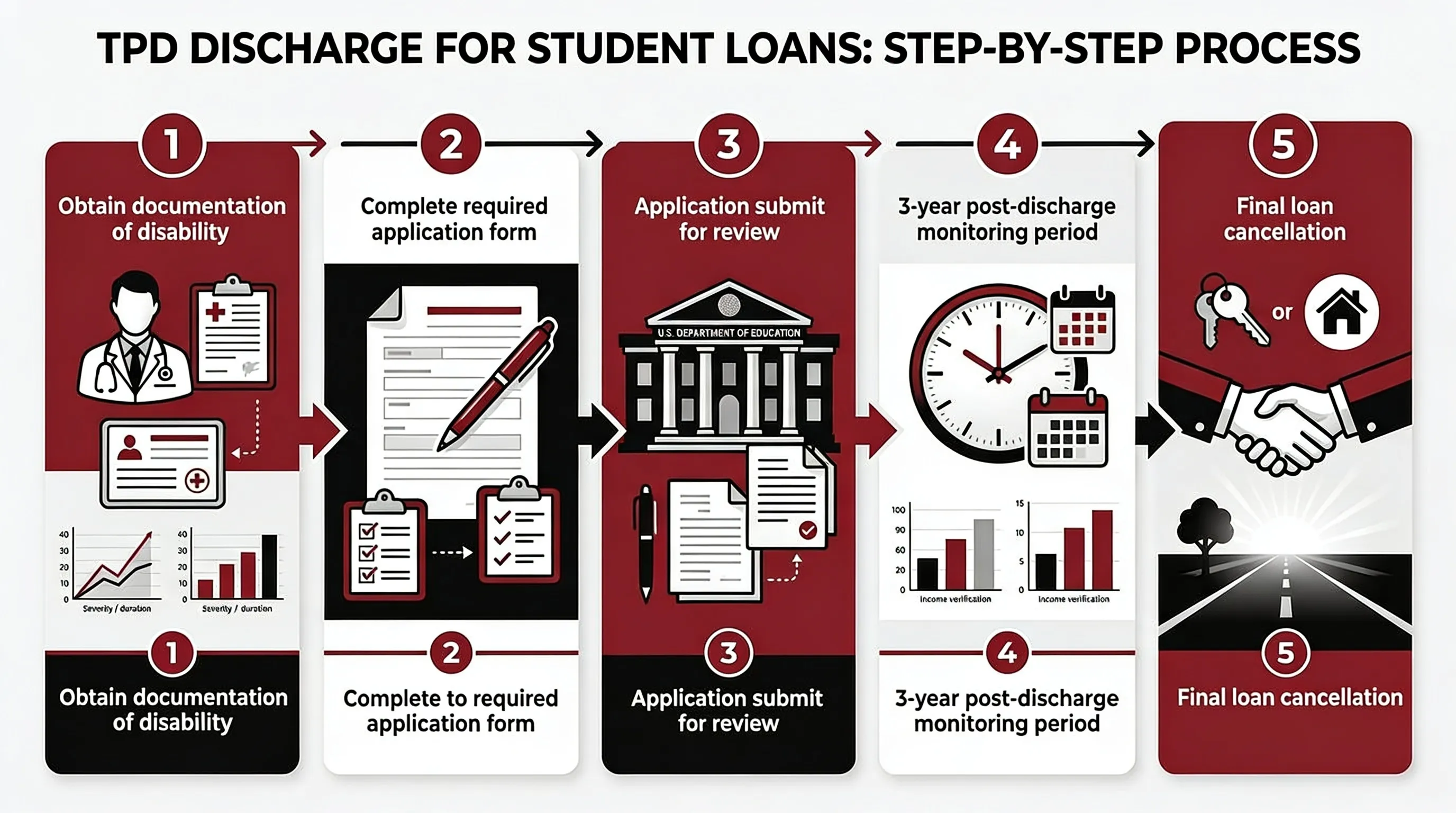
The program is administered by Nelnet on behalf of the U.S. Department of Education. Borrowers can apply through three pathways: a Social Security disability determination, a physician certification, or a VA disability rating. Each pathway has specific documentation requirements.
The process is entirely online and takes between 30 and 90 days to complete once all documents are submitted.
Legal Foundation of Total and Permanent Disability Discharge
According to the federal regulations governing TPD discharge, the program is authorized under the Higher Education Act of 1965. The law defines total and permanent disability as a condition that prevents you from engaging in substantial gainful activity. This definition is consistent across all three application pathways.
For Social Security recipients, you qualify if you receive SSDI or SSI benefits and your next disability review is scheduled five to seven years out. For physician certification, your doctor must confirm that your condition has lasted or will last at least 60 months or result in death. For veterans, a 100% service-connected disability rating from the VA automatically qualifies you.
The legal framework also includes a three-year monitoring period after discharge. During this time, you cannot earn more than the poverty line for a family of two in your state.
You also cannot receive a new federal student loan. If you meet these conditions, your discharge becomes permanent after three years.
Which Federal Student Loans Qualify for TPD Discharge
Direct Loans are the most common loan type eligible for TPD discharge. This includes Direct Subsidized Loans, Direct Unsubsidized Loans, Direct PLUS Loans for parents, and Direct Consolidation Loans.
If you consolidated older loans into a Direct Consolidation Loan, the entire balance qualifies.

FFEL Program loans also qualify. These are older loans issued by private lenders but guaranteed by the federal government. If you still have FFEL loans, they can be discharged through TPD without consolidating first. Federal Perkins Loans, which were campus-based loans for students with exceptional financial need, are also eligible.
Private student loans do not qualify for federal TPD discharge. However, some private lenders offer their own disability discharge provisions. You need to contact your lender directly to ask about their policy. The terms vary widely and are not standardized like federal programs.
Understanding who qualifies for disability benefits across different programs can help you identify other financial relief options beyond student loan discharge.
Financial Impact: How Much Debt Can Be Cancelled
Discharged loan amounts range from $10,000 to over $100,000 depending on your outstanding balance. The average federal student loan borrower carries around $37,000 in debt. For someone with advanced degrees or multiple loans, the total can exceed six figures. TPD discharge eliminates the entire balance regardless of how much you owe.
The financial relief is immediate once the discharge is approved. You stop making monthly payments. Collection activity stops if your loans were in default. Wage garnishment ends. Tax refund offsets stop. The discharged amount does not count as taxable income under current federal law, though this was not always the case.
For borrowers on income-driven repayment plans, TPD discharge can save decades of payments. For those in default, it can prevent further legal action and credit damage.
The program offers one of the most significant one-time financial benefits available to people with qualifying disabilities.
Three Ways to Qualify for TPD Discharge: SSA, VA, and Physician Certification
Total and permanent disability discharge offers three distinct pathways to cancel your federal student loans. Each route has different requirements and timelines. You only need to qualify through one pathway to receive full discharge.
Social Security Administration Disability Determination
The SSA pathway is the most straightforward option for many borrowers. You qualify automatically if you receive Social Security Disability Insurance or Supplemental Security Income based on disability. The Department of Education matches SSA records to identify eligible borrowers.
This pathway requires no additional application. Once SSA approves your disability claim, you become eligible for TPD discharge. The process takes 90 to 120 days after SSA notifies the loan servicer.
Many borrowers don’t realize health conditions that qualify for disability benefits also make them eligible for student loan discharge. This includes diabetes with severe complications, heart disease, and chronic pain conditions.
Veterans Affairs Service-Connected Disability Rating
Veterans with a 100% service-connected disability rating qualify automatically for TPD discharge. The VA must rate your disability as totally disabling. Partial ratings do not meet the threshold.
You submit VA documentation directly to the Department of Education. The discharge application requires your VA determination letter showing the 100% rating. Processing takes 60 to 90 days once you submit complete documentation.
Veterans dealing with conditions like PTSD benefits for veterans often qualify through this pathway. The VA rating must be permanent, not temporary or subject to future review.
Physician Certification of Total and Permanent Disability
The physician pathway requires a licensed doctor to certify your total and permanent disability. Your doctor must confirm you can’t engage in substantial gainful activity. The condition must last at least 60 months or result in death.

This option works for borrowers who don’t receive SSA benefits or VA ratings. You download the physician certification form from the Department of Education website. Your doctor completes Section 2, certifying your disability status.
Processing takes 90 to 120 days after submission. You enter a three-year monitoring period after discharge. During this time, you must submit annual income documentation to confirm you remain disabled.
If you don’t qualify through any of these three pathways, you may still have options. Explore student loan forgiveness for students with disabilities to see other cancellation programs, and look into student disability accommodations that can support you while you remain in repayment.
How to Apply for TPD Discharge: Step-by-Step Application Process
Applying for TPD discharge for student loans starts with understanding which path fits your situation.
You can qualify through Social Security Administration disability determination, Veterans Affairs disability rating, or physician certification. Each route has different documentation needs and processing timelines.
Gathering Required Documentation for Your Application
SSA and VA applicants need minimal paperwork. You only need your Social Security number and date of birth. The system verifies your disability status automatically through federal databases.
Physician certification applicants face more steps. You must download the certification form from disabilitydischarge.com. A licensed MD or DO must complete and sign it. The form asks about your condition, how it affects your ability to work, and expected duration. Your doctor must certify that your disability prevents substantial gainful activity and will last at least 60 months or result in death.
Also gather copies of your loan documents. You need your loan servicer names and account numbers. Keep records of any previous deferment or forbearance periods. According to the Public Trust Law Alliance, having complete documentation speeds up the review process and reduces the chance of denial.
Submitting Your TPD Discharge Application Online
All applications go through disabilitydischarge.com. The site walks you through each step based on your qualification type. SSA applicants enter their information and the system confirms eligibility instantly in most cases.
VA applicants follow a similar process. The system checks your disability rating through VA records. If your rating is 100% service-connected and permanent, approval happens quickly.
Physician certification applicants upload their completed forms. You can scan or photograph the signed certification. The system accepts PDF, JPG, and PNG files. Double-check that all signatures are visible and dates are current before submitting.
What Happens After You Submit Your Application
Processing takes 60 to 90 days from submission. You get a confirmation email right away. This email includes your application ID and estimated review timeline.
The Department of Education reviews your application and supporting documents. They may contact you for additional information. Respond quickly to avoid delays.
You receive written notification by mail and email once a decision is made. Approved borrowers enter a three-year post-discharge monitoring period. During this time, you cannot exceed the poverty line income threshold for your family size. You also cannot take out new federal student loans.
Students returning to school after discharge should review benefits for students to understand how new enrollment affects their status.
After three years with no violations, your discharge becomes permanent and your loans are fully cancelled.
Understanding the Three-Year Monitoring Period After TPD Discharge
After your TPD discharge for student loans gets approved, you enter a mandatory three-year monitoring period. This period confirms your disability status remains permanent. The Department of Education uses this time to verify you don’t return to substantial work.
Income Reporting Requirements During Monitoring
You must submit annual income documentation to Nelnet during the monitoring period. This documentation shows your earnings don’t exceed the poverty guideline for your family size and state.
According to the Federal Register, borrowers must report earnings within 60 days of each anniversary date.
Nelnet sends annual reminders to submit your income documentation. You can submit tax returns, pay stubs, or Social Security benefit statements. Missing a deadline can trigger reinstatement of your discharged loans.
What Can Cause Your Discharge to Be Reinstated
Earning above the poverty guideline during monitoring triggers automatic reinstatement. Your discharged loans return to repayment status with all previous balances restored. Interest also resumes from the reinstatement date.
Receiving a new federal student loan during monitoring reinstates your discharge immediately. The same applies to accepting a TEACH Grant. Both actions signal you’ve returned to school and substantial work capacity.
How to Successfully Complete the Monitoring Period
Submit all required income documentation on time each year. Keep copies of everything you send to Nelnet. Set calendar reminders 30 days before each anniversary date.
SSA and VA pathway borrowers skip monitoring if their disability determination is permanent. This exemption applies automatically when you receive approval through these pathways. Once you complete three years without triggering reinstatement, your discharge becomes permanent with no further obligations.
Tax Implications of TPD Discharge: What You Need to Know for 2026
Getting your student loans discharged through total and permanent disability discharge brings real financial relief. But you need to know how taxes work on that cancelled debt. The rules changed recently and they matter for your wallet.
Federal Tax Treatment of Discharged Student Loan Debt
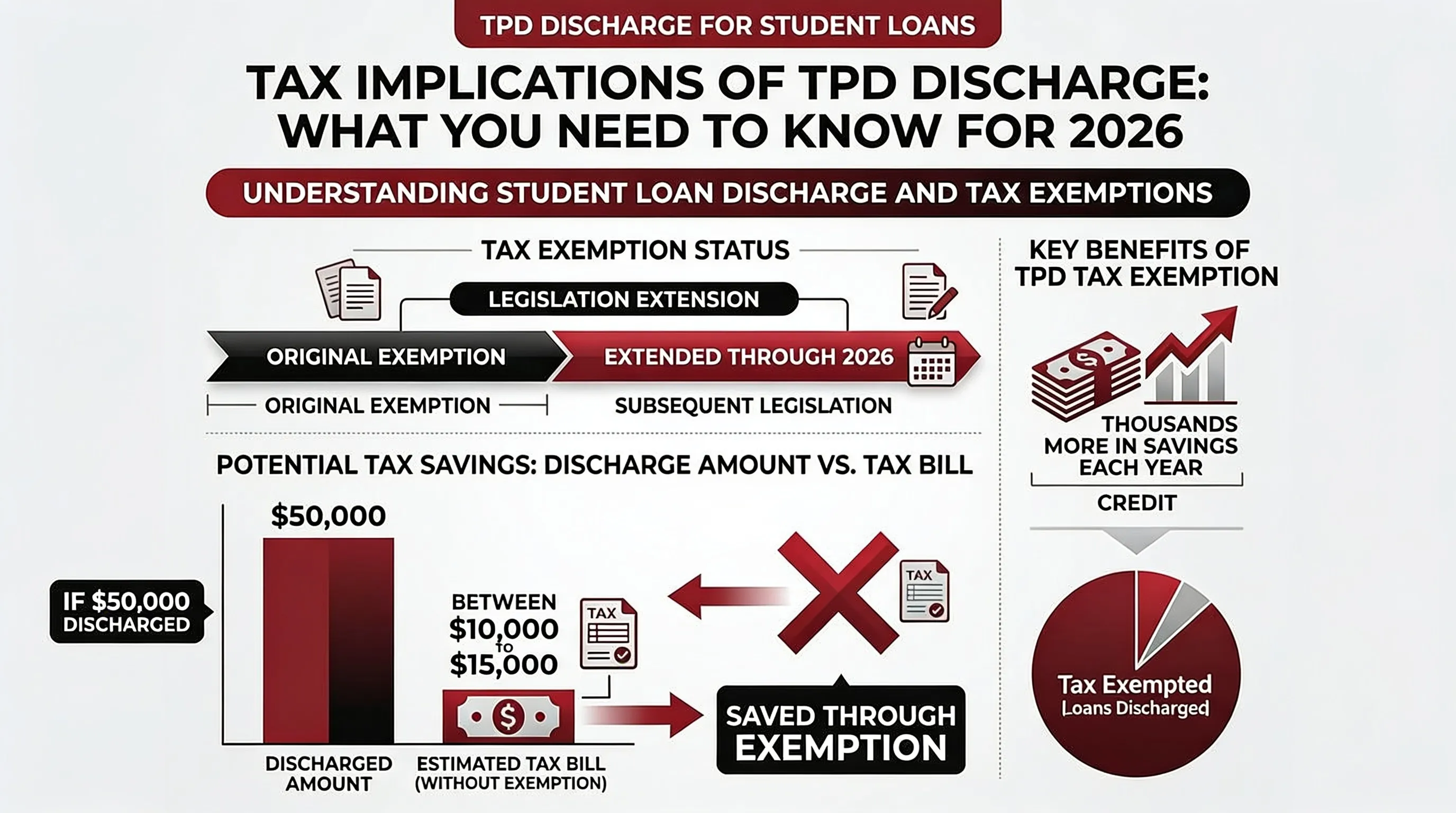
Here’s the good news. Under the American Rescue Plan Act, discharged federal student loan debt isn’t treated as taxable income through December 31, 2025. This tax exemption was extended through 2026 under subsequent legislation.
This means TPD discharge recipients won’t owe federal income tax on cancelled debt in 2026. That’s a big deal when you think about the numbers.
If you have $50,000 in loans discharged, you won’t see a $10,000 to $15,000 tax bill.
The exemption applies to all federal student loans discharged through TPD. It covers Direct Loans, FFEL Program loans, and Federal Perkins Loans. You don’t need to report the discharged amount as income on your federal tax return.
Beyond student loan discharge, understanding tax credits available for people with disabilities can add thousands more in savings each year.
State Tax Considerations for TPD Discharge Recipients
Federal tax exemption doesn’t tell the whole story. State tax treatment varies by state. Some states conform to federal tax law automatically. Others treat discharged debt as taxable income at the state level.
States like California and Pennsylvania conform to federal rules. Your discharged debt won’t be taxed there. But other states may still count it as income. This can create a surprise tax bill even when federal taxes don’t apply.
You should consult a tax professional or your state revenue department before filing. They can tell you exactly how your state handles TPD discharge. The difference can mean hundreds or thousands of dollars depending on your state’s tax rate and your discharged balance.
Returning to School After TPD Discharge: What Happens to Your Eligibility
Getting a TPD discharge for student loans brings relief. But what happens if your health improves and you want to go back to school? The rules are strict. You need to know them before you enroll.
Federal Student Aid Eligibility After Discharge
You lose eligibility for new federal student aid during the three-year monitoring period. This includes Direct Loans, FFEL loans, and TEACH Grants. The monitoring period starts the day your discharge is approved.
This means you can’t get new Pell Grants or federal work-study either. The restriction covers all Title IV aid programs. You must wait until monitoring ends to apply for new federal student aid.
Reinstatement Rules for Borrowers Who Return to School
Taking out a new Direct Loan during the monitoring period reinstates your discharged balance. The same applies to FFEL loans and TEACH Grants. You become responsible for the full original amount again.
After you complete the three-year monitoring period successfully, you may regain eligibility. This happens if your condition improves and you can work again. Some borrowers choose to return to school and accept reinstatement of their loans.
Temple University and other schools have specific policies for TPD discharge recipients. You must contact the financial aid office before enrolling. They can explain how reinstatement works at that institution. Most schools require documentation of your current health status and income.
Common TPD Discharge Mistakes and How to Avoid Them
Applying for TPD discharge for student loans can feel overwhelming. Many borrowers make simple errors that delay approval or trigger reinstatement. Knowing what to avoid helps you get it right the first time.
Documentation Errors That Delay or Deny Applications
Incomplete physician certification forms are the most common reason for application denial. Your doctor must fill out every section completely. Missing signatures, dates, or medical details cause automatic rejections.
Applying through the wrong pathway when you qualify through multiple routes can delay processing. You might qualify through Social Security, VA disability, or physician certification.
Each pathway has different forms and timelines. Choose the fastest option based on your existing documentation.
Monitoring Period Violations That Trigger Reinstatement
Failing to submit annual income documentation during monitoring can result in automatic reinstatement. The three-year monitoring period requires you to report earnings annually. Miss one deadline and your loans come back with interest.
Not updating your contact information with Nelnet can cause you to miss critical monitoring period communications. They send reminders by mail and email. Wrong address means missed deadlines and reinstated debt.
Working with a benefits platform like Rocket Records helps you track deadlines and submit documentation correctly. The platform sends renewal reminders so nothing lapses. You get all paperwork prepared and filed on time without the stress of managing it alone.
Conclusion
TPD discharge for student loans offers potentially life-changing financial relief for Americans with total and permanent disabilities.
Depending on your circumstances, you may qualify based on Social Security Administration documentation, a VA disability determination, or certification from an authorized medical professional. Each pathway has its own eligibility and documentation requirements.
Understanding the rules that apply after discharge is also important, including any applicable monitoring requirements, enrollment restrictions, and tax considerations. Carefully completing your application, providing the required documentation, and responding to requests or deadlines can help prevent unnecessary delays.
Start by identifying which qualification pathway fits your situation. Gather your medical records, disability documentation, and federal student loan information so you’re prepared for the application process.
Rocket Records can help you explore whether you may qualify for TPD discharge for student loans and other disability benefits programs. Take the free eligibility quiz to see which programs may match your circumstances and get help simplifying the paperwork.
Check your eligibility and take the first step toward understanding the benefits that may be available to you.






 Ask ChatGPT
 Ask Claude
 Ask Perplexity