

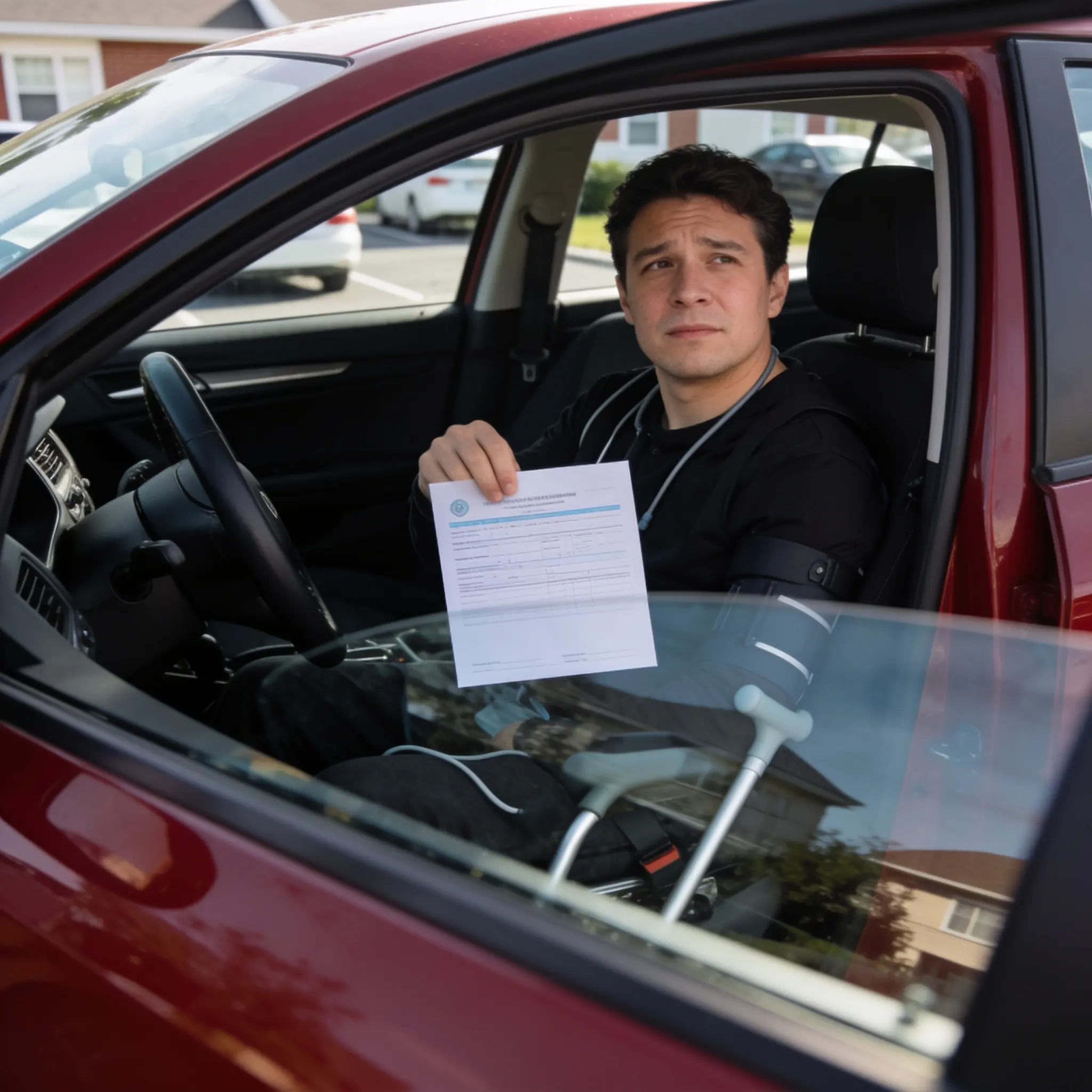

Most people with qualifying medical conditions don’t know they can apply for both a tint exemption and parking placard using the same medical records. You don’t need two doctor visits or duplicate paperwork. One set of medical documentation can support both applications, saving you time and money. But here’s what trips people up: these programs run separately, with different eligibility rules. You might qualify for one without qualifying for the other. Many people miss out on benefits they deserve because they don’t understand how these two accommodations connect.
This guide shows you precisely how window tint exemptions and handicap parking placard programs work as separate systems. You’ll learn which medical conditions support each application, how to use one medical record to simplify both processes, and what each program costs. We’ll walk through the step-by-step application process, explain state-specific tint laws and medical window tint exemption requirements, and show you how platforms like Rocket Records help you secure both permits at once without filling out the same forms twice.
By the end, you’ll know whether you qualify for a tint exemption and parking placard, what documentation you need, and how to avoid the common mistakes that delay approvals or waste your money.
Understanding Window Tint Exemptions and Parking Placards as Separate Programs
Many people assume that a medical window tint exemption and a handicap parking placard are connected or bundled together. That’s not how it works. These are two completely separate programs run by different state agencies. Each has its own application process, eligibility rules, and approval criteria.
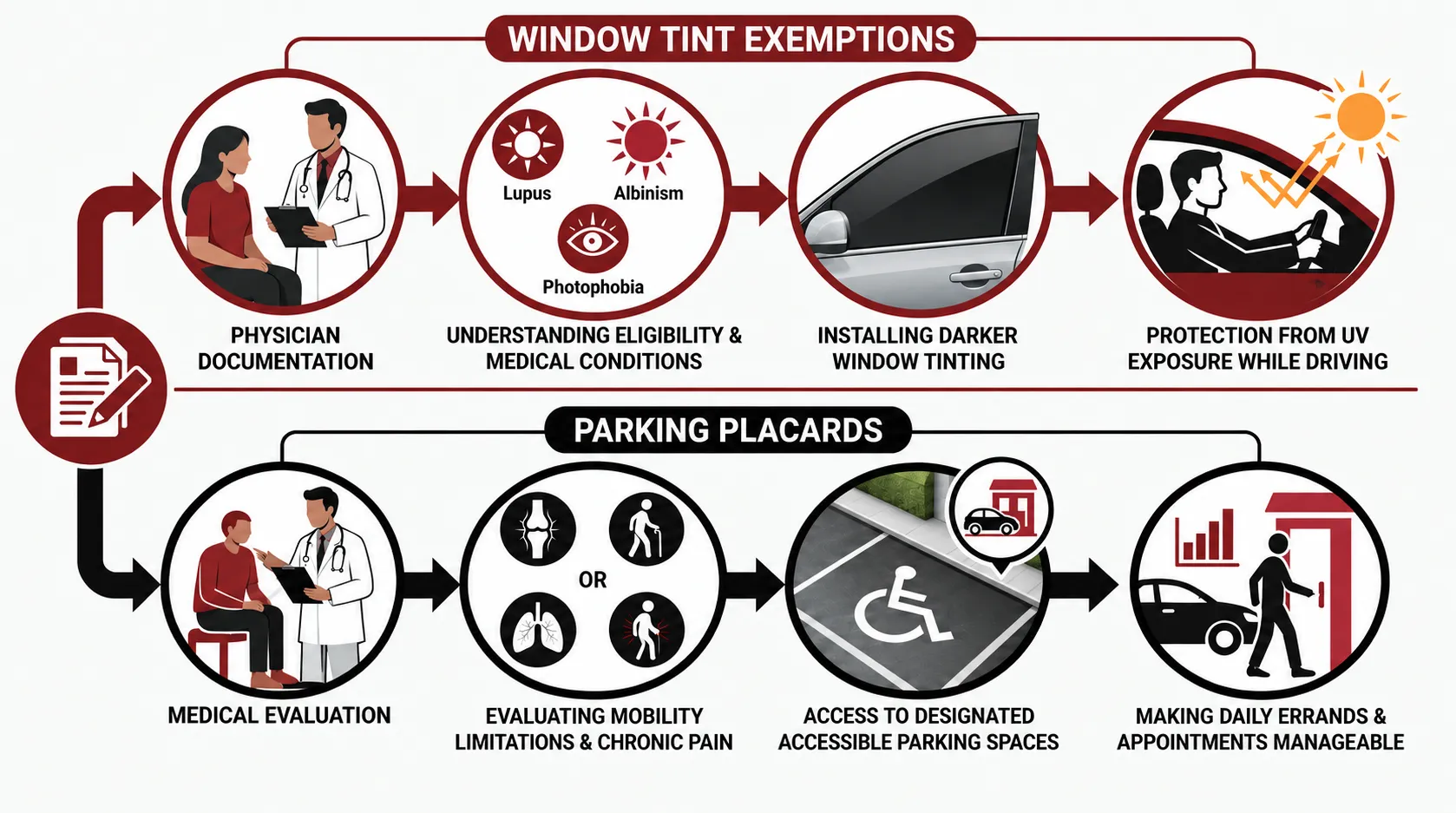
A medical window tint exemption allows you to install darker window tinting than your state normally permits. This benefit helps people with photosensitivity or light-sensitive medical conditions. Conditions like lupus, albinism, and certain eye disorders can make bright sunlight painful or dangerous. The exemption protects you from UV exposure while driving.
A handicap parking placard provides access to designated accessible parking spaces. These spots are closer to building entrances. They help people with mobility limitations, chronic pain, or conditions that make walking long distances difficult. The placard makes daily errands and appointments more manageable.
Both programs require medical certification from a licensed healthcare provider. Your doctor must confirm your condition and explain how it limits your daily function. That’s where the similarity ends.The issuing agency varies by state. Parking placards are usually handled by a motor vehicle agency. Tint exemptions may be handled by the DMV or another state agency.
Qualifying for one program does not automatically qualify you for the other. Each agency reviews your application independently. They use different eligibility criteria. A condition that qualifies you for a parking placard may not meet the requirements for a tint exemption. The reverse is also true.
That said, many conditions do qualify for both benefits. Lupus, for example, often causes both photosensitivity and mobility limitations. Severe arthritis can make walking painful while also causing light sensitivity due to medication side effects. You can apply for both programs at the same time. Just know that each application is reviewed separately by different agencies.
Medical Conditions That May Support a Tint Exemption, a Parking Placard, or Both
Some health conditions qualify you for both a medical window tint exemption and a handicap parking placard. Others qualify you for just one. Understanding which conditions support each benefit helps you claim what you’re entitled to.
Photosensitivity and Light-Sensitive Conditions
Lupus, albinism, and porphyria cause severe photosensitivity. These conditions make UV exposure dangerous. According to Georgia’s medical tint exemption requirements, a medical tint exemption requires documentation showing that the condition requires a reduction in visible light beyond what legal tint or other protective measures provide.
That said, photosensitivity alone doesn’t qualify you for a parking placard. You need documented mobility limitations too. If you can walk without difficulty, you’ll likely qualify for tint only.
Vision impairments like glaucoma and macular degeneration also qualify for tint exemptions. These conditions cause severe glare sensitivity. Darker windows reduce eye strain and improve comfort. However, vision problems don’t automatically qualify you for parking placards unless they also limit your mobility.
Mobility Impairments and Chronic Pain
Diabetic peripheral neuropathy causes pain, numbness, and instability in your legs and feet. This condition qualifies for parking placards because it limits walking distance. It may also qualify for tint exemptions when combined with diabetic retinopathy or other light-sensitive complications.
Cardiovascular conditions that limit walking distance qualify for parking placards. These include heart failure, severe coronary artery disease, and pulmonary hypertension. However, they don’t qualify for tint exemptions unless you also have light-sensitive complications.
Chronic pain conditions like severe arthritis qualify for parking placards when they limit mobility. Tint exemptions require separate documentation of photosensitivity or glare sensitivity.
Autoimmune and Neurological Conditions
Multiple sclerosis, rheumatoid arthritis, and fibromyalgia may qualify for both benefits. These conditions often cause mobility limitations and light sensitivity. However, each program evaluates eligibility independently. You need separate medical documentation for each benefit.
According to Parking MD, autoimmune conditions qualify for parking placards when they cause fatigue, joint pain, or walking limitations. Tint exemptions require documented photosensitivity or vision complications.
When Only One Benefit May Apply
Skin conditions like severe eczema or post-surgical skin grafts may qualify for tint exemptions. These conditions require UV protection. However, they don’t qualify for parking placards if mobility isn’t affected.
On the other hand, someone with severe mobility limitations but no light sensitivity qualifies for a parking placard only. Each benefit addresses different medical needs. You can apply for one or both depending on your documented conditions.
How One Medical Record Can Support Both Applications
You don’t need two separate doctor visits to apply for a tint exemption and parking placard. A single medical record can support both applications if your condition affects mobility and light sensitivity. This saves time, money, and the hassle of coordinating multiple appointments.
Many people don’t realize they can use the same documentation for both programs. The key is making sure your physician addresses both needs in one comprehensive certification.
What Medical Documentation You Need
Your medical documentation must include your diagnosis, how it affects daily functioning, and why each accommodation is medically necessary. For a parking placard, your doctor needs to confirm mobility limitations. For a tint exemption, they must document photosensitivity or vision issues.
Both conditions can stem from the same underlying health issue. For example, lupus causes joint pain that limits walking distance. It also triggers severe photosensitivity that makes driving in bright light dangerous.
The documentation should include:
-
Your specific diagnosis with ICD-10 codes
-
How your condition limits mobility or causes light sensitivity
-
Why each accommodation is medically necessary
-
Expected duration of your condition
-
Your physician’s license number and signature
Most states accept a detailed physician letter on official letterhead. Some require specific forms, but the medical information remains the same across both applications.
How to Structure Your Physician Certification
Your physician certification should address both needs in separate paragraphs. Start with your diagnosis and overall health status. Then explain how your condition affects mobility. Finally, describe how it causes photosensitivity or vision problems.
For mobility, your doctor should note walking distance limitations, balance issues, or pain that makes long walks difficult. For tint exemption, they should document light sensitivity, glare intolerance, or specific eye conditions.
The letter should be clear and specific. Vague statements like “patient has difficulty walking” won’t support your application. Instead, your doctor should write “patient can walk no more than 200 feet without severe pain due to diabetic neuropathy.”
Understanding how the application process works for both programs helps you prepare the right documentation from the start. This prevents delays and resubmissions.
State-Specific Requirements and Variations
Most states require physicians to complete specific DMV forms for parking placards. These forms are separate from tint exemption documentation. However, the medical information your doctor provides remains consistent across both.

Tint exemption applications often accept a physician letter on official letterhead. Some states have specific forms you must use instead. Check your state DMV website to confirm which format they accept.
Some states allow online submission of medical documentation. Others require in-person or mail applications for one or both programs. Processing times vary from a few days to several weeks depending on your state.
Permanent certifications are available for chronic conditions like lupus or multiple sclerosis. Temporary certifications cover short-term needs like recovery from surgery. Each program may have different duration options, so ask your doctor to specify the appropriate timeframe for each application.
Even when using the same medical record, you must submit separate applications to the appropriate agency for each program. The parking placard goes to your state DMV. The tint exemption may go to DMV, Department of Public Safety, or another agency depending on your state.
Step-by-Step Application Process for Tint Exemption and Parking Placard
Getting both a tint exemption and parking placard takes planning. You need separate applications for each program. Start early to avoid delays.
Step 1: Gather the Medical Documentation
Schedule an appointment with your doctor. Discuss your need for both accommodations. Your physician must certify that your condition affects mobility and light sensitivity.
Request a detailed medical letter. It should address both issues clearly. The letter must explain how your health limits daily activities.
Your doctor should describe specific symptoms. For example, diabetic neuropathy causes pain and instability. Photosensitivity makes bright light unbearable. Both conditions need clear documentation.
Step 2: Complete the Required Forms for Each Program
Download your state’s handicap placard form from the DMV website. Your physician completes the medical certification section. This form is separate from the tint exemption application.
Check your state’s transportation department website for tint exemption requirements. According to Georgia’s window tinting exemption application process, you must submit specific medical documentation and vehicle information. Download all required forms before your appointment.
Have your doctor fill out both forms during the same visit. This saves time and ensures consistency. Keep copies of everything for your records.
Step 3: Submit Each Application to the Correct Issuing Agency
Submit the parking placard application to your local DMV office. You can mail it or visit in person. Include any required fees with your submission.
Submit the tint exemption application to your state’s Department of Transportation or Highway Patrol. This is a separate submission from the placard. Don’t send both to the same agency.
Processing times range from 2 to 6 weeks. The timeline depends on your state and application method. Each program processes independently.
Once approved, you receive a parking placard from the DMV. The transportation agency sends a tint exemption certificate. Keep the certificate in your vehicle at all times.
State Tint Laws and Medical Exemption Requirements
Window tint laws vary widely across the United States. Most states limit front side window tint to 35% to 50% visible light transmission. This standard protects officer safety during traffic stops. Officers need to see inside vehicles clearly before approaching.
However, medical exemptions change these rules dramatically. People with photosensitivity, lupus, or certain eye conditions can qualify for darker tint. Medical window tint exemption programs allow tint as dark as 20% to 25% VLT in many states. Some states permit even darker levels depending on the documented condition.
Standard Window Tint Laws Across the United States
Each state sets its own baseline tint limits. Front windshields typically allow only a strip across the top. Front side windows face the strictest rules. Most states require 35% VLT or higher for these windows.
Rear windows and back side windows often have fewer restrictions. Many states allow any darkness level on rear windows for standard drivers. This creates confusion when people assume all windows follow the same rules.
Also, enforcement varies by jurisdiction. Some areas rarely check tint levels. Others conduct regular inspections and issue citations frequently. You need to know your state’s specific requirements before tinting any window.
How Medical Exemptions Change Allowable Tint Levels
A medical window tint exemption lets you install darker tint than standard laws allow. Qualifying conditions include photosensitivity, lupus, albinism, and severe migraines triggered by light. Your doctor must certify that darker tint is medically necessary.
Once approved, you can typically install tint as dark as 20% to 25% VLT on front-side windows. Some states go darker for severe conditions. Rear windows may allow complete darkness with a valid exemption certificate.
Exemption rules differ by state. For example, Virginia requires medical authorization before adding approved sun-shading, while New York requires a specific medical exemption application. Check your state’s requirements before applying.
Enforcement and Documentation Requirements
Some states require you to carry proof of your tint exemption in the vehicle. Officers cannot verify exemption status without seeing your documentation. Failing to present it during a stop can result in citations even with a valid exemption on file.
Law enforcement officers receive training to recognize medical exemption certificates. They will ask to see your certificate during traffic stops. The document must be current and match your vehicle registration. Expired certificates hold no legal weight.
In addition, some states require visible stickers or decals on tinted windows. These markers alert officers that you have a medical exemption. Not displaying required markers can lead to fines. Understanding how benefit programs work together helps you stay compliant with all documentation requirements across multiple assistance programs.
Cost Breakdown: What You Pay for Tint Exemption and Parking Placard Applications
Getting a tint exemption and parking placard involves several costs. Understanding these expenses helps you budget for both benefits. Most fees are modest, but installation costs can add up quickly.
Application Fees by State
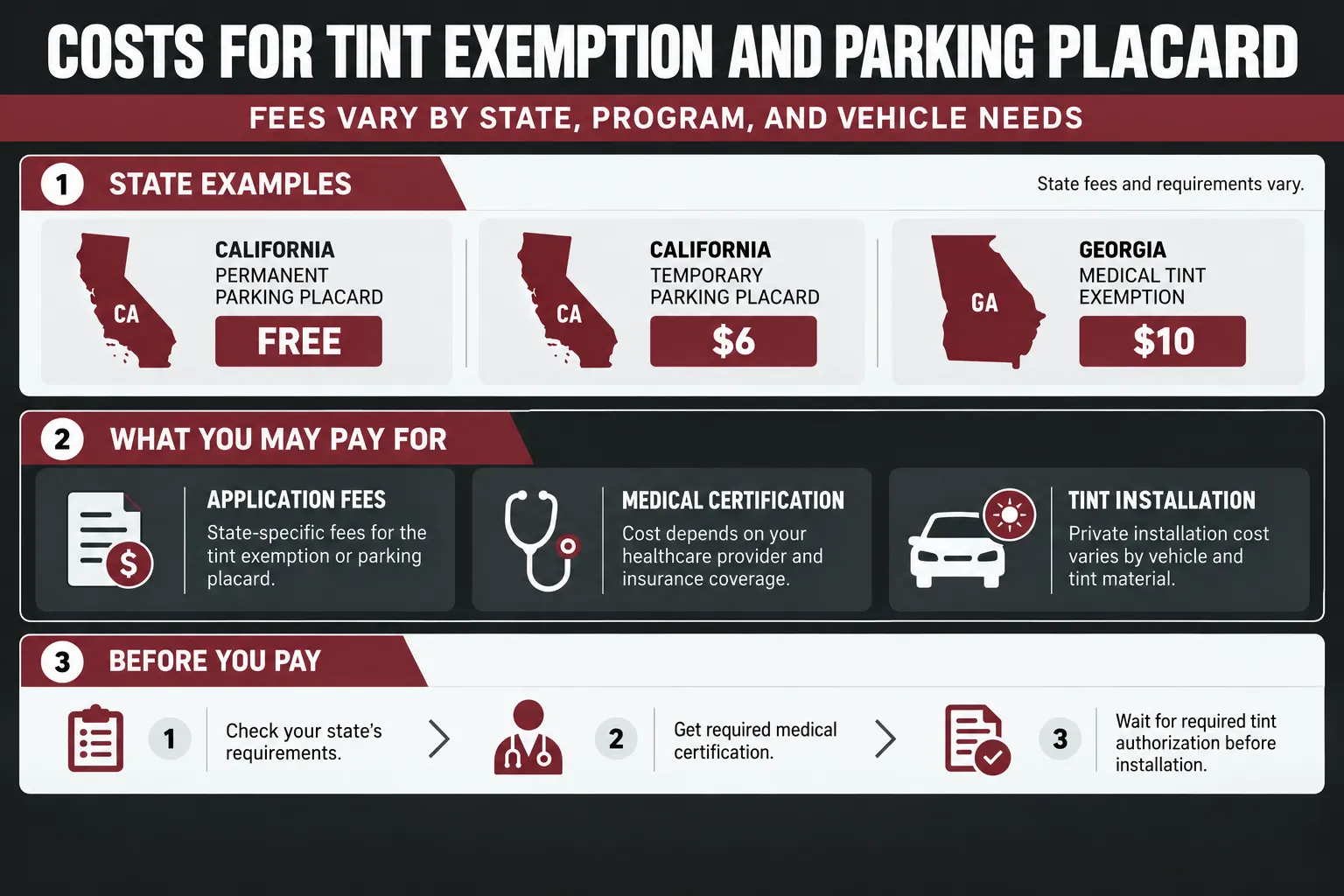
Parking placard applications range from free to $25. Most states charge minimal fees or nothing at all. California charges $6 for a permanent placard. Texas offers them at no cost.
Tint exemption applications typically cost $10 to $50. This covers state processing and administrative work. For example, Massachusetts requires an original tinted glass waiver application and physician certification for eligible vehicles.
You pay these fees once for permanent permits. Temporary permits may need renewal every few years. Check your state’s DMV website for exact amounts.
Medical Certification Costs
Physician certification visits may be covered by insurance. Without coverage, expect to pay $50 to $150 out of pocket. This depends on your provider and insurance plan.
Some doctors charge a flat documentation fee. Others bill it as a standard office visit. Call ahead to confirm costs before your appointment.
Window Tinting Installation Costs
Professional window tinting installation costs $200 to $600. This depends on vehicle size, number of windows, and tint quality. Sedans cost less than SUVs or trucks.
Medical-grade ceramic tint costs more than standard dyed film. It blocks UV rays better and provides superior protection for photosensitive conditions. Ceramic tint runs $400 to $600 for most vehicles.
Total upfront cost for both benefits ranges from $300 to $800. This includes all fees, medical visits, and installation. Keep in mind that your total cost depends on state fees, medical certification costs, and any vehicle tint installation you choose. The investment pays off through daily convenience and health protection.
How Rocket Records Simplifies Getting Both Tint Exemption and Parking Placard
Getting a tint exemption and parking placard usually means two separate applications. You fill out different forms. You visit different offices. You track two timelines.
Rocket Records changes that. The platform identifies both benefits in one health assessment. You answer questions about your condition once. The system matches you to every program you qualify for.
AI-Powered Benefit Matching for Dual Eligibility
Most people don’t realize they qualify for both benefits. They apply for one and miss the other entirely.
Rocket Records uses AI to scan your medical information against thousands of programs. The system checks federal, state, and local databases. It finds every benefit tied to your condition.
For photosensitivity, the platform flags both medical window tint exemption and parking placard eligibility. For mobility issues from neuropathy, it does the same. You see both options in your dashboard within minutes.
Over 250,000 Americans have used the platform to claim multiple benefits at once. The average user saves 8 to 12 hours of administrative work by consolidating applications.
Pre-Filled Paperwork and Medical Certification Assistance
Once the system identifies your eligibility, it generates pre-filled forms. The platform pulls your medical information and state requirements. It populates every field correctly.
You don’t hunt for DMV forms or doctor’s offices. Rocket Records handles the disabled discount pass application and tint exemption paperwork together. Licensed physicians review your case through the platform.
When appropriate, they provide medical certification letters for both applications. The letters satisfy state requirements for parking placards and how to get a tint exemption with medical condition documentation. You submit everything from one place.
Tracking and Renewal Management
Both permits expire. Parking placards need renewal every few years. Tint exemptions have different timelines by state.
Rocket Records tracks both application statuses in real time. You see where each one stands. The platform sends reminders before renewals are due. You never lose coverage because of a missed deadline.
All data stays HIPAA-compliant. The platform uses bank-level encryption to protect your personal and medical information. Nothing gets shared without your explicit consent.
Common Mistakes to Avoid When Applying for Tint Exemption and Parking Placard
Applying for a tint exemption and parking placard can feel straightforward. But small errors cause major delays. Many people lose months waiting for approval because they missed one critical step.
Incomplete Medical Documentation
The most common mistake is submitting vague medical letters. Your doctor must specify how your condition limits daily function. Generic statements like “patient has photosensitivity” won’t pass review.
Instead, the letter should explain exactly what you can’t do. For example, “Patient can’t walk more than 50 feet without severe pain due to diabetic neuropathy.” This level of detail makes approval far more likely.
California’s DMV requires medical certification for many disability placard applications and lists specific qualifying mobility and visual impairments. Without this, both your medical window tint exemption and placard applications may be denied.
Applying to the Wrong State Agency
Not all states handle these programs the same way. Some require separate applications for window tint and parking permits. Others process both through the DMV.
Submitting your tint exemption form to the wrong office wastes weeks. Check your state’s specific process before you start. Many people assume the DMV handles everything, but some states route tint requests through the Department of Health or Motor Vehicles separately.
Using outdated forms is another frequent error. States update their paperwork regularly. Download fresh forms from your state’s official website before applying.
Missing Renewal Deadlines
Temporary placards expire faster than most people realize. If you don’t renew before the deadline, you lose parking privileges immediately. You’ll need to reapply from scratch.
Set a calendar reminder 30 days before expiration. This gives you time to get updated medical documentation if needed. Most states require a new doctor’s letter for each renewal.
Installing tint before approval is a costly mistake. Even if your application is pending, you can still get cited. Wait for your official exemption certificate before making any vehicle modifications. Keep that certificate in your car at all times to avoid unnecessary traffic stops.
Conclusion
You now know how tint exemption and parking placard programs work. These benefits serve different needs but share one thing. Both require medical proof from a licensed doctor.
The good news? You can use one medical record for both applications. This saves time and cuts costs. You don’t need two separate doctor visits or two sets of paperwork.
Start by checking your state’s rules for each program. Then gather your medical records that show your condition. Fill out both applications at the same time. This approach gets you both benefits faster.
Most people spend weeks on this process. They schedule doctor visits, fill out forms, and wait for approvals. But there’s a faster way.
Take the free eligibility quiz at Rocket Records right now. You’ll find out if you qualify for a medical window tint exemption, parking placard, or both. The platform creates pre-filled applications and connects you with doctors who can certify your need. Most users finish in under 10 minutes and get their permits in 2 to 4 weeks.





 Ask ChatGPT
 Ask Claude
 Ask Perplexity