

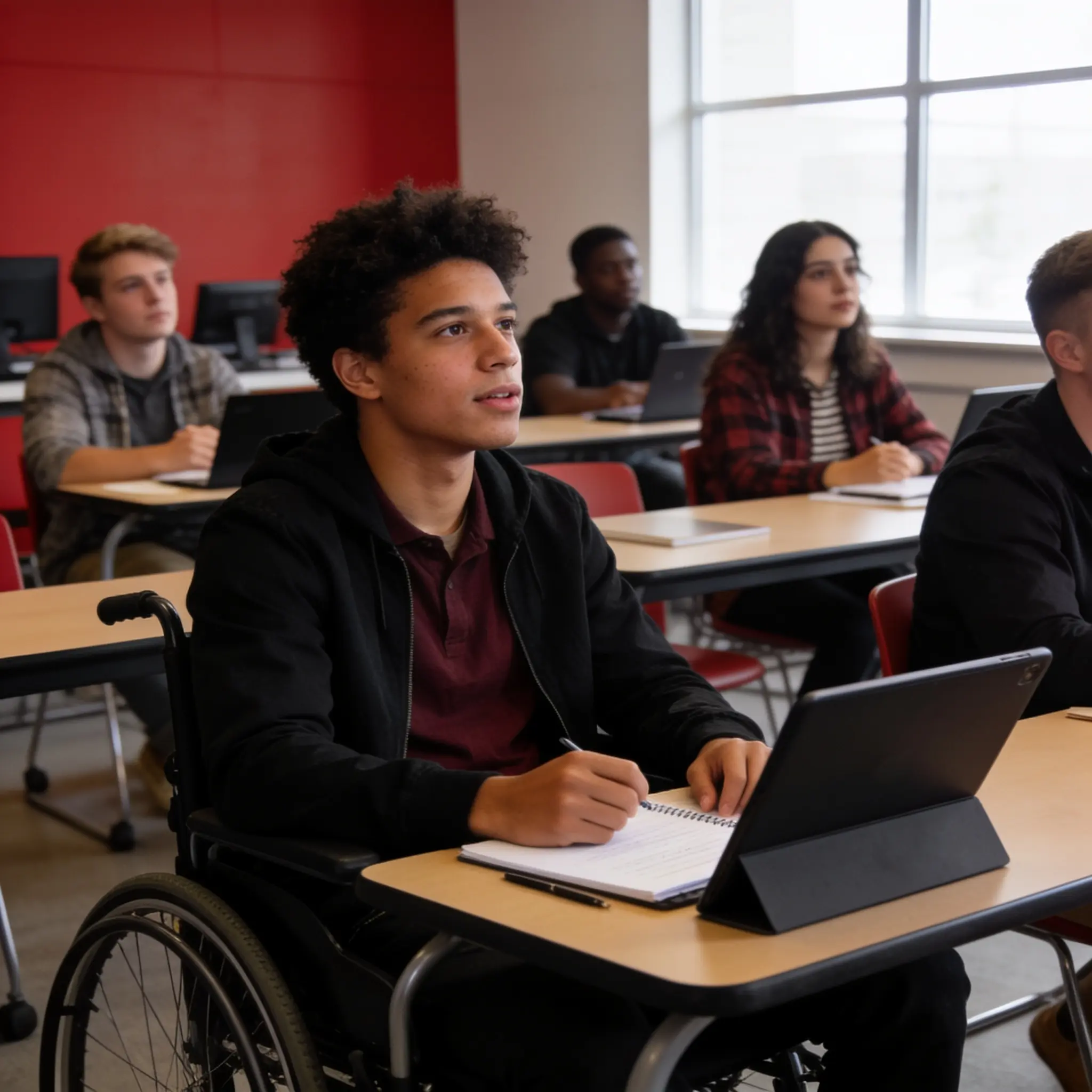

Student disability accommodations give you the right to equal access in college.
Federal law protects this right. Yet most students don’t know what they can request or how to start. Between managing classes, health needs, and paperwork, getting the support you deserve feels like a full-time job.
Here’s what matters: you qualify for accommodations if you have any physical disability, learning disability, chronic health condition, or mental health condition. These supports level the playing field. You can get extra test time, note-taking services, flexible deadlines, and more. The catch? You need proper documentation and you must know how to request them.
This guide walks you through your legal rights under the ADA and Section 504. You’ll learn what types of academic accommodations for disabilities exist and how to apply step by step. We also cover common barriers students face and how platforms like Rocket Records help you document your condition to access student disability accommodations faster.
Understanding Your Legal Rights to Student Disability Accommodations
Federal laws protect students with disabilities at every education level. These protections give you the right to access programs, services, and accommodations that level the playing field. But the rules change as you move from high school to college. You need to know what protections apply and how to claim them.
Two major laws create the foundation for student disability accommodations. The first is the Americans with Disabilities Act (ADA). The second is Section 504 of the Rehabilitation Act. Both laws work together to protect your rights, but they apply differently depending on your school type and education level.
Americans with Disabilities Act (ADA) Protections for Students
The ADA Title II applies to all public colleges and universities. It requires these schools to provide equal access to programs and services for students with disabilities. This means you can’t be excluded from classes, activities, or campus facilities because of your condition.
Public schools must make reasonable changes to policies and procedures. They also need to provide auxiliary aids and services when needed. For example, a student with hearing loss might receive sign language interpreters or real-time captioning during lectures.
Private colleges that receive federal funding also fall under ADA protections. Most private schools do receive this funding through student loans and grants. This brings them under the same requirements as public institutions.
However, the ADA doesn’t require schools to make changes that would fundamentally alter their academic programs. A nursing program doesn’t have to waive clinical requirements. A math degree doesn’t have to eliminate core calculus courses. The accommodation must be reasonable and maintain academic standards.
Section 504 of the Rehabilitation Act Coverage
Section 504 prohibits discrimination based on disability in any program receiving federal funding. This includes public K-12 schools, public colleges, and most private colleges. According to federal disability rights laws, schools must provide a free appropriate public education to students with disabilities at the K-12 level.
At the college level, Section 504 requires schools to provide reasonable accommodations. These might include:
-
Extended time on tests and assignments
-
Note-taking services or recorded lectures
-
Accessible course materials in alternative formats
-
Priority registration for classes
-
Reduced course loads without losing full-time status
You must self-identify and request accommodations. Schools are not required to identify students with disabilities. This is a major shift from K-12 education, where schools actively screen and evaluate students.
Documentation requirements are also more strict. You typically need recent evaluations from licensed professionals. The documentation must show how your disability limits a major life activity and what accommodations you need.
How College Disability Rights Differ from K-12 Protections
The transition from high school to college brings significant changes in disability rights. In K-12 settings, schools must identify students who need services. They create Individualized Education Programs (IEPs) or 504 plans. Parents play an active role in the process.
College works differently. You become responsible for initiating the accommodation process. You must contact the disability services office, submit documentation, and communicate with professors about your needs. Parents no longer have automatic access to your records or meetings.
Also, students exploring benefits for anxiety and related conditions should understand that mental health disabilities receive the same protections as physical disabilities. Schools must provide reasonable accommodations for anxiety, depression, PTSD, and other mental health conditions when properly documented.
Colleges don’t have to provide personal attendants, individually prescribed devices, or services of a personal nature. They also don’t have to make modifications that would fundamentally alter the nature of a program. The focus shifts from ensuring success to ensuring equal access and opportunity.
Types of Academic Accommodations Available to Students with Disabilities
Students with disabilities can access a wide range of academic accommodations designed to level the playing field. These services help you succeed without lowering academic standards. They address barriers that might otherwise prevent you from demonstrating your true abilities.
The key is knowing what’s available and how to request it. Most colleges offer far more support than students realize. Let’s break down the three main categories of accommodations you can access.
Testing and Exam Accommodations
Testing modifications are among the most common disability accommodations in college. Extended time is the most frequently granted accommodation. You typically get time-and-a-half or double time on exams.

Beyond extra time, you can request a separate testing environment. This reduces distractions and sensory overload. Some students need a quiet room to focus effectively.
Other testing accommodations include:
-
Use of a computer or word processor for essay exams
-
Breaks during long exams to manage fatigue or pain
-
Alternative test formats like oral exams or take-home tests
-
Permission to use assistive technology during exams
These modifications don’t change what you’re tested on. They simply remove barriers to showing what you know.
Classroom and Learning Support Modifications
Classroom accommodations help you access course content and participate fully. Note-taking services are common for students who can’t write effectively during lectures. You might receive copies of another student’s notes or access to lecture recordings.
Priority registration is another valuable accommodation. It lets you select classes before the general student body. This helps you build a schedule that works with your disability needs.
According to the auxiliary aids and services guidelines, institutions must provide reasonable modifications to policies and practices. Alternative format textbooks come in audio, digital, or large print versions. These make course materials accessible regardless of visual or learning disabilities.
Flexible attendance policies matter for chronic health conditions. When medically necessary, you can get assignment deadline extensions. Students managing conditions that require frequent medical appointments or cause unpredictable flare-ups benefit significantly from this flexibility.
Technology and Assistive Device Access
Assistive technology opens doors for students with various disabilities. Screen readers convert text to speech for students with visual impairments. Speech-to-text software helps those who struggle with typing or writing.
Many colleges provide access to:
-
Specialized software for reading, writing, and organization
-
Adaptive keyboards and pointing devices
-
Audio recording devices for lectures
-
Captioning services for video content
Some students need mental health accommodations for anxiety and focus that include distraction-reducing technology. The right tools can transform your academic experience. They help you work around limitations and focus on learning.
How to Apply for Student Disability Accommodations: Step-by-Step Process
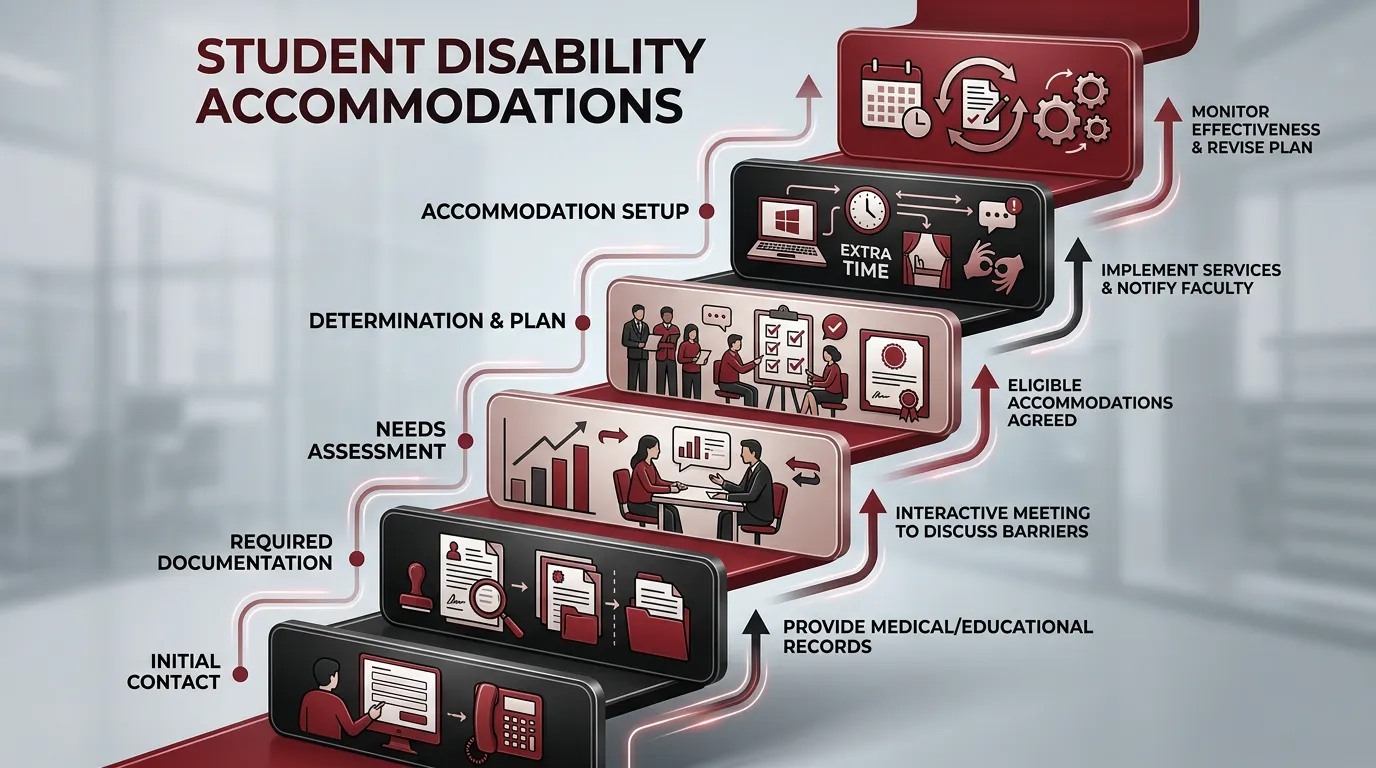
Getting student disability accommodations starts with reaching out to your school’s disability services office. Do this before classes begin if possible. Early contact gives you time to gather documents and set up support before coursework starts.
The process takes several weeks in most cases. You’ll submit paperwork, meet with a coordinator, and receive letters to share with professors. Each step builds toward a plan that fits your needs.
Required Documentation and Medical Records
Your school needs proof of your disability from a licensed healthcare provider. This documentation must describe your diagnosis and explain how it affects your daily functioning. Most schools accept records from doctors, psychologists, or other qualified professionals.
Documentation requirements vary by institution and condition type. Some schools accept records from the past three years. Others require evaluations completed within the last five years. Check your school’s specific timeline before gathering records.
How Documentation Helps Your Accommodation Request
Medical documentation is what schools rely on to approve accommodations. It provides objective evidence that you have a disability and explains the specific ways it affects your academic performance. Without this documentation, disability services staff have no legal basis to approve accommodations, even if you describe your struggles in detail.
Strong documentation does several things. It establishes that your condition is real and diagnosed by a qualified professional. It shows how your disability creates barriers to learning, testing, or participation in campus activities. It also connects your requested accommodations directly to your documented needs, making it clear why each support is necessary.
Schools use documentation to determine which accommodations are appropriate and reasonable. The records help staff understand whether you need extended test time due to processing speed, note-taking support due to attention difficulties, or flexible attendance due to medical appointments. Clear documentation speeds up the approval process and reduces back-and-forth requests for additional information.
Without proper documentation, schools can legally deny accommodation requests. This is why getting recent evaluations from qualified professionals matters so much. The investment in proper documentation upfront saves you time and frustration later.
Documentation needs vary depending on what you’re requesting. Beyond academic accommodations, the same records often support other applications: an emotional support animal letter for campus housing, or eligibility review through the students hub for broader financial and health benefits. Students with permanent disabilities may also want to look into TPD discharge, which can cancel federal student loans entirely based on qualifying documentation.
Your provider should detail functional limitations clearly. For example, a student with ADHD might need documentation showing difficulty with sustained attention or time management. A student with chronic pain might need records showing mobility challenges or fatigue. Understanding how schools verify disability eligibility requirements helps you prepare the right paperwork from the start.
Platforms like Rocket Records help organize medical records for accommodation requests. The service matches your health information to available programs and prepares documentation in the format schools require.
What Schools Review When Evaluating Accommodation Requests
When a student submits a request, disability services staff look closely at the documentation provided by a qualified professional, such as a doctor, psychologist, or licensed evaluator.
They check that the paperwork is recent, identifies a specific diagnosis, and describes how the condition affects daily functioning, particularly in an academic setting.
Staff also compare the requested accommodations to the information in the documentation. If a student asks for extended test time, reviewers want to see that the records explain why timed exams pose a barrier related to the diagnosis.
Requests that seem disconnected from the supporting evidence may be questioned or sent back for clarification
Common Factors Reviewers Consider
-
Whether the documentation is current, usually within the last one to three years
-
The credentials of the evaluator who provided the diagnosis
-
How the condition limits participation in coursework or campus life
-
Whether the accommodation directly addresses the documented limitation
-
Past accommodation history, including what has worked in previous school settings
Students who understand these expectations can prepare stronger requests. Bringing clear, detailed records and being ready to explain how a condition affects coursework helps staff make a decision without unnecessary delays.
Meeting with Your Disability Services Office
Once you submit documentation, you’ll schedule an intake meeting with a disability services coordinator. This conversation covers your academic needs and determines appropriate accommodations. Be ready to discuss how your condition affects learning, testing, and participation.
The coordinator reviews your records and asks about past accommodations that worked well. They also explain what support your school offers. Common options include extended test time, note-taking assistance, priority registration, and accessible classroom seating.
After this meeting, you’ll receive an accommodation plan. This document lists approved supports and explains how the process works for implementing them each semester. Keep this plan accessible throughout your academic career.
Communicating Accommodations to Your Professors
You receive accommodation letters at the start of each term. These letters confirm your approved supports without disclosing your specific diagnosis. You’re responsible for sharing them with each professor individually.
Contact professors during the first week of class. Email works well for initial outreach. Attach your letter and request a brief meeting to discuss implementation. Most professors respond positively when approached early.
Follow up if accommodations aren’t implemented correctly. Your disability services office can intervene if needed. They serve as your advocate when communication breaks down or professors resist providing approved supports.
Common Challenges Students Face When Requesting Disability Accommodations
Getting student benefits services and disability accommodations can feel overwhelming. Many students face barriers that delay or prevent access to support they need. Understanding these challenges helps you prepare and advocate for yourself.
Documentation Barriers and Cost of Medical Evaluations
One of the biggest obstacles is getting proper documentation. Colleges need formal proof of your disability to approve accommodations. This means you need recent evaluations from licensed professionals.
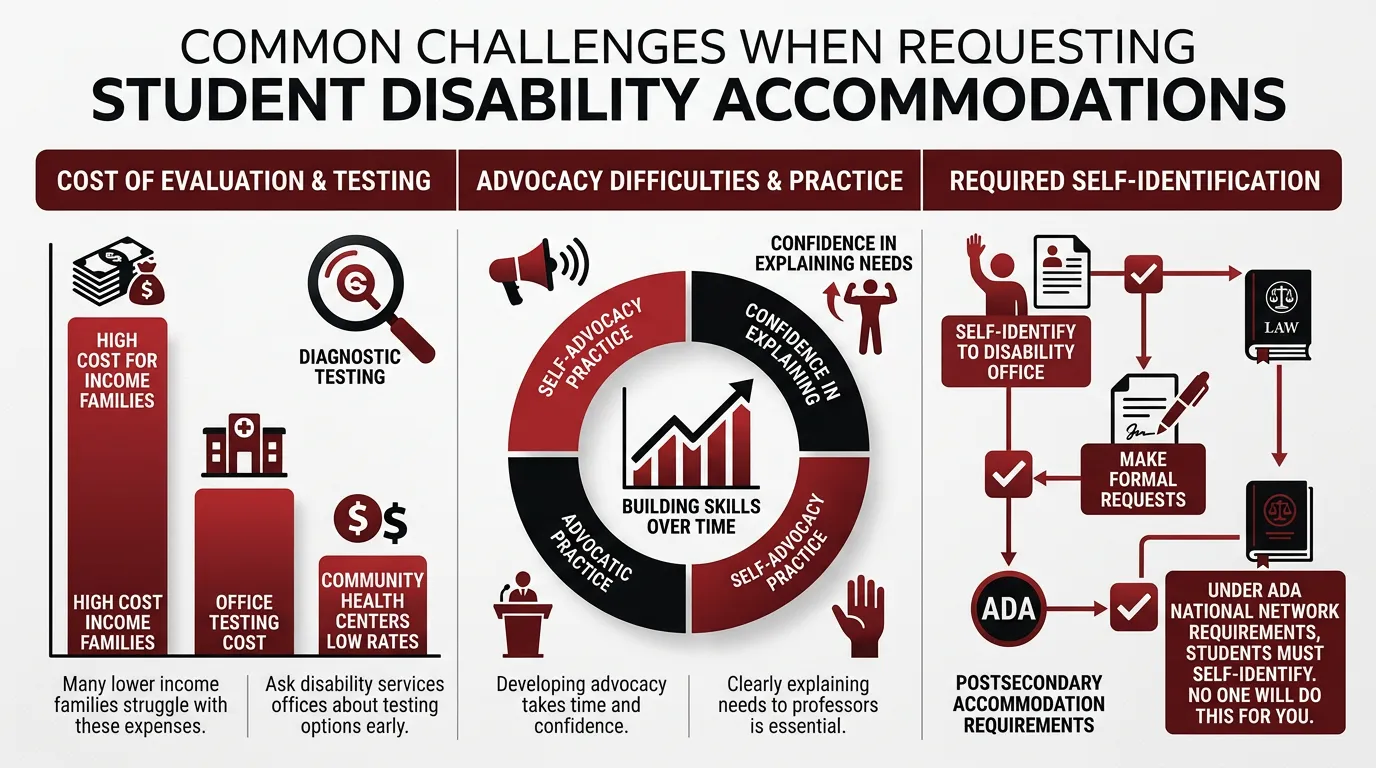
The cost creates a real problem. Comprehensive psychological or educational evaluations can cost $500 to $3,000. Many insurance plans don’t cover these assessments. Students from low-income families often can’t afford this expense.
Some schools offer free or reduced-cost testing through their disability services office. Ask about this option early. Community health centers may also provide evaluations at lower rates.
Stigma and Self-Advocacy Difficulties
Many students delay requesting accommodations due to fear of being treated differently. They worry professors or peers will judge them. This stigma keeps students from getting help they legally deserve.
Self-advocacy takes practice and confidence. You must explain your needs clearly to professors and administrators. According to the ADA National Network’s postsecondary accommodation requirements, students must self-identify and request accommodations. No one will do this for you.
Peer support groups and disability advocacy organizations provide guidance and community. These groups help you practice self-advocacy skills in a safe space.
When Accommodations Are Denied or Inadequate
Some professors may resist implementing accommodations despite legal requirements. They might question whether you really need extra time or note-taking assistance.
This creates unnecessary stress during an already difficult semester. For a deeper look, see student benefits services.
Appeals processes exist if your accommodation request is denied. Most schools have a formal review system. Document everything in writing and keep copies of all correspondence.
Students can file complaints with the Office for Civil Rights if discrimination occurs. This federal office investigates violations of disability rights laws. Don’t hesitate to use this option when schools fail to provide required support.
How Rocket Records Helps Students Access Disability Accommodations and Benefits
Students with disabilities face a maze of paperwork and documentation requirements. Rocket Records cuts through this complexity by connecting you with licensed healthcare providers who complete accommodation forms quickly. The platform handles everything from initial disability verification to ongoing documentation needs.
Streamlined Medical Documentation for Accommodation Requests
Getting proper documentation is often the biggest barrier to accessing student disability accommodations. Many students wait weeks or months for appointments with specialists who can certify their conditions. Rocket Records solves this by providing same-day access to licensed physicians who understand accommodation requirements.
The platform prepares documentation for multiple needs at once. You can get FMLA paperwork for medical leave, ESA letters for campus housing, and handicap parking permits through a single process. According to Disability Rights California, colleges must provide reasonable modifications once proper documentation is submitted.
All medical records stay HIPAA-compliant and encrypted. You control who sees your information and when. The platform never shares your data without explicit permission.
Conclusion
Student disability accommodations are your legal right, not a favor. Federal laws protect you at every education level. You can access academic adjustments that create equal opportunities.
This guide covered your legal protections under ADA and Section 504. You learned what types of disability accommodations in college exist. We walked through the application process step by step. You now know common challenges and how to overcome them.
Start by contacting your school’s disability services office today. Gather your medical documentation and request an intake meeting. Don’t wait until you’re struggling in classes.
Beyond academic accommodations for disabilities, you may qualify for other benefits. Rocket Records matches your health information to programs you didn’t know existed. Take five minutes to see what student disability accommodations and financial programs you qualify for right now.






 Ask ChatGPT
 Ask Claude
 Ask Perplexity