


Prescription assistance applications go to the program sponsor. Rocket Records helps match your records and assemble documentation. We do not promise Medicare Extra Help on this page.
Program sponsors decide. We match and document.
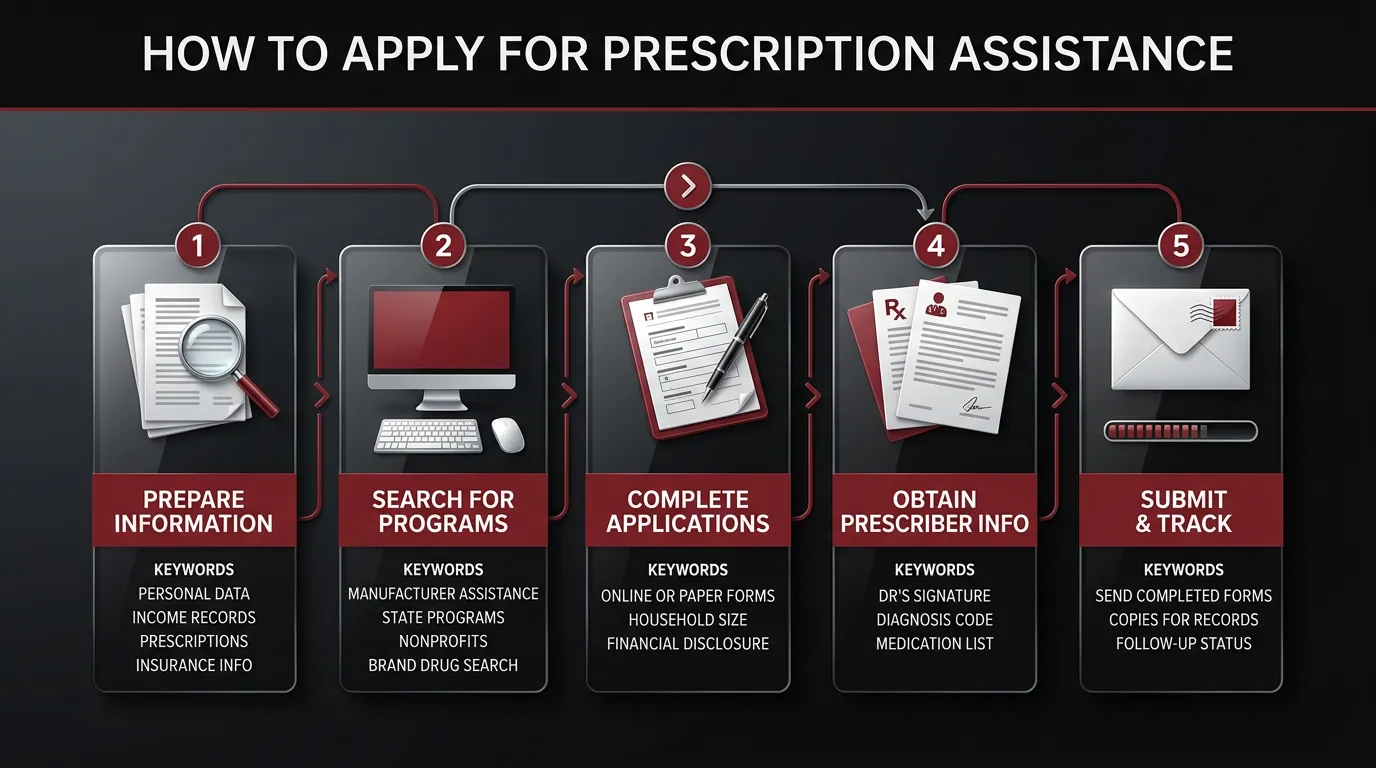
The application process for prescription assistance involves four straightforward steps. First, you list your medications and current prescriptions. Next, you upload your medical records and income documentation. Then, Rocket Records reviews your information and matches you to programs you qualify for.
Finally, you submit your approved applications directly to the sponsors who make the final decisions.
The problem isn’t that these programs don’t exist. Most people just don’t know how to find them or which ones they qualify for. Each program has different eligibility rules and required paperwork. Applying to multiple patient assistance program application options individually takes weeks or months. Many people give up before they get help.
This guide walks you through precisely how to apply for prescription assistance in 2026. You’ll learn about manufacturer programs, Medicare Extra Help, state pharmaceutical assistance, and nonprofit options.
We’ll cover what documents you need, how long approval takes, and how platforms like Rocket Records help you apply to dozens of programs at once in under five minutes.
What Is Prescription Assistance and Who Qualifies in 2026?
Prescription assistance programs help people afford medications they need to manage chronic conditions. These programs cut costs for prescriptions, copays, and supplies.
They work for people with or without insurance. If you pay more than $100 per month for medications, you likely qualify for at least one program.
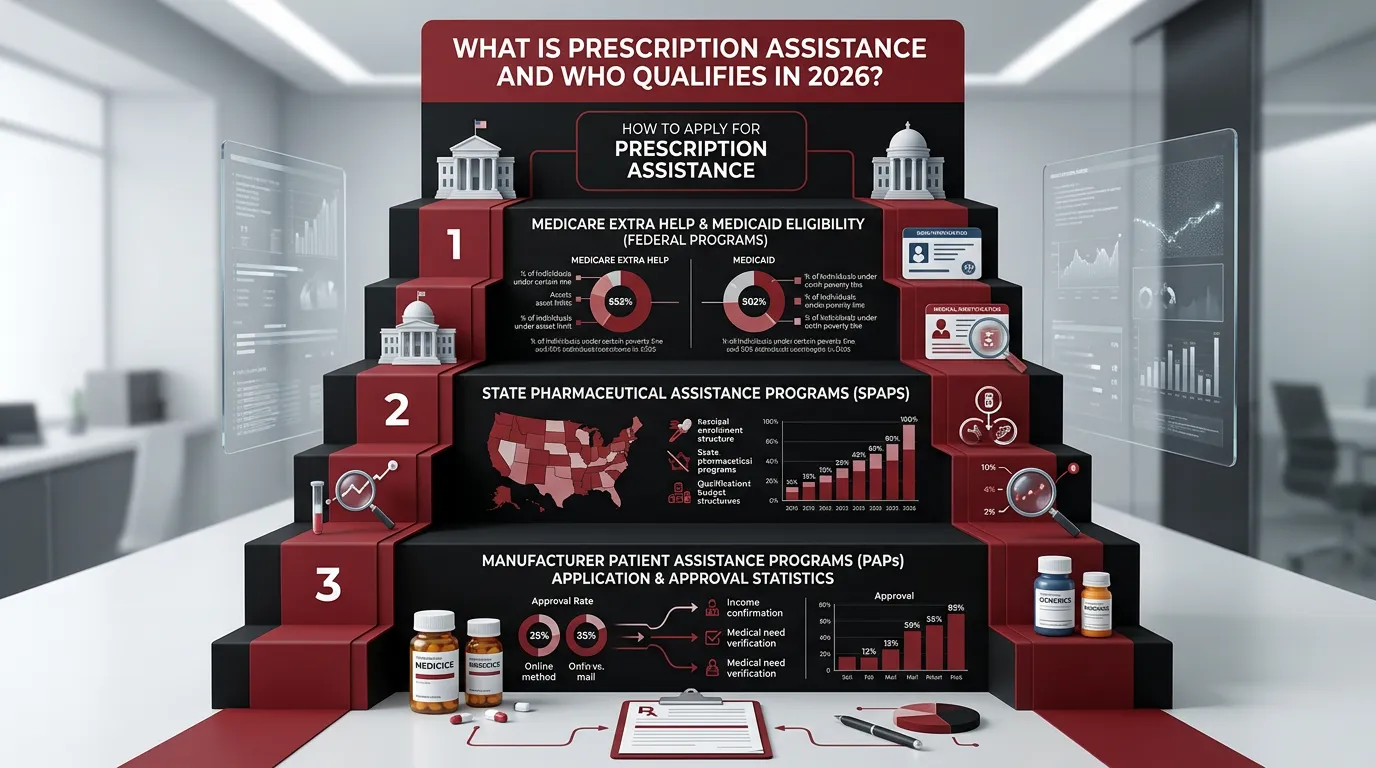
Types of Prescription Assistance Programs Available
Several program types exist to help cover prescription costs. Each serves different populations and income levels.
-
Manufacturer patient assistance programs (PAPs): Drug companies offer free or low-cost medications directly to qualifying patients
-
Federal programs: Medicare Extra Help and Medicaid cover prescription costs for eligible enrollees
-
State pharmaceutical assistance programs (SPAPs): State-run programs supplement federal coverage with additional drug benefits
-
Nonprofit assistance funds: Organizations like Needy Meds and Rx Assist connect patients to available resources
Chronic conditions often have dedicated programs. People managing conditions similar to diabetes disability benefits programs find higher income thresholds and more options. Cancer, heart disease, autoimmune disorders, and mental health conditions also qualify for specialized assistance.
Income Requirements and Eligibility Thresholds
Most manufacturer PAPs require household income at or below 200-400% of the federal poverty level. For 2026, that means $31,200 to $62,400 annually for a single person. A family of four qualifies with income up to $130,000 in some programs.
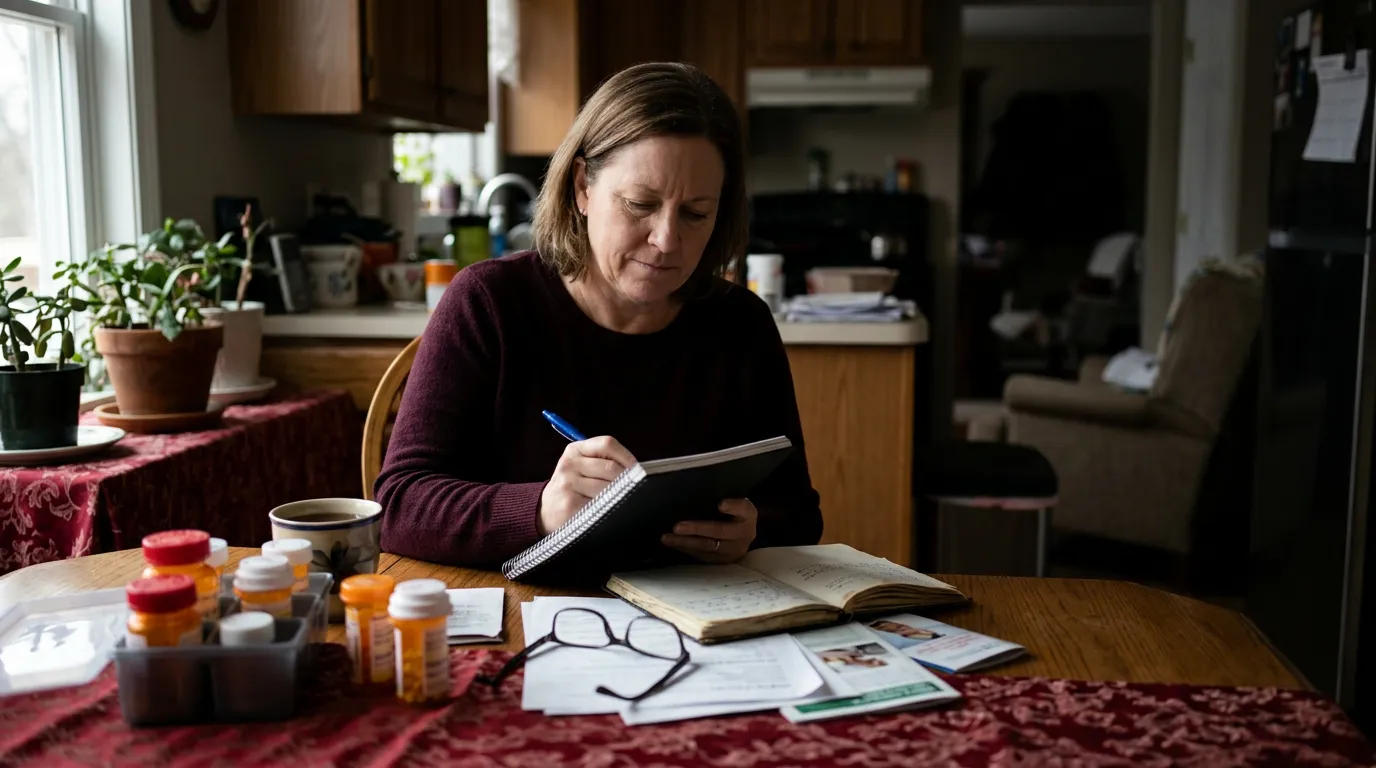
Documentation requirements include proof of income like tax returns or pay stubs. You’ll also need Social Security statements, proof of residency, and a valid prescription from a licensed provider. Some programs require an insurance denial letter showing your plan won’t cover the medication.
Programs for serious conditions like cancer treatment support and disability benefits often accept higher income levels. This recognizes the financial burden of managing complex health needs.
Insurance Status and How It Affects Qualification
You can qualify for prescription assistance even with insurance coverage. Many programs help with copays, deductibles, or medications your plan excludes.
This is called copay assistance or gap coverage.
Medicare beneficiaries access Extra Help to cover Part D costs. Medicaid provides comprehensive drug coverage for low-income enrollees. Private insurance holders use manufacturer copay cards to reduce out-of-pocket costs at the pharmacy counter.
Uninsured patients often qualify for the most generous assistance. Manufacturer PAPs frequently provide medications at no cost to uninsured applicants who meet income requirements.
State programs also prioritize uninsured residents in their coverage decisions.
Step-by-Step: How to Apply for Manufacturer Patient Assistance Programs
Applying for prescription assistance through manufacturer programs can save you thousands of dollars each year. The process is straightforward once you know where to look.
Most pharmaceutical companies run these programs to help people who can’t afford their medications.
Finding the Right Manufacturer Program for Your Medication
Start by identifying who makes your prescribed medication. This information appears on your prescription bottle. You can also ask your pharmacist.
Once you know the manufacturer, visit their website. Search for “patient assistance program” or “prescription help.” Major companies like Novo Nordisk, Eli Lilly, Pfizer, and Astra Zeneca all operate these programs. According to manufacturer patient assistance programs guidance from CMS, these programs help millions of Americans access medications they otherwise couldn’t afford.
Each manufacturer has different income limits and eligibility rules. Some programs cover people earning up to 400% of the federal poverty level. Others set lower thresholds. Check each program’s specific requirements before applying.
Completing the Application and Required Documentation
Applications require several pieces of information. You’ll need your personal details, household income documentation, and prescription information. Your physician must also sign the form confirming medical necessity.
Most programs ask for annual income verification. This includes tax returns, W-2 forms, or Social Security benefit statements. Gather these documents before starting your application. Having everything ready speeds up the process.
Many people use prescription assistance services to apply for multiple programs at once. This approach saves time and ensures you don’t miss any programs you qualify for.
What Happens After You Submit Your Application
Processing time varies by manufacturer. Most programs take 2 to 8 weeks to review applications. Some offer expedited review for urgent medication needs. Contact the program directly if you need faster processing.
Once approved, medications ship directly to your home or your doctor’s office. Most programs provide 90-day supplies at no cost. You’ll need to reapply annually to maintain coverage. Set a reminder so your benefits don’t lapse.
How to Apply for Medicare Extra Help and Part D Prescription Coverage
Medicare Extra Help, also called the Low Income Subsidy, helps pay Part D premiums, deductibles, and copayments. This program targets people with limited income and resources. It can save you thousands of dollars each year on prescription costs.
Medicare Extra Help Eligibility and Application Process
In 2026, you qualify if your annual income is below $23,940 for individuals. For married couples, the limit is $32,460. Your resources must be below $17,220 for individuals or $34,360 for couples.

Resources include bank accounts, stocks, and bonds. Your home and one vehicle don’t count. Personal belongings and life insurance also get excluded from the calculation.
With the help of Social Security, you can apply online. The application takes about 20 minutes to complete.
Approval is often automatic if you receive Medicaid. Supplemental Security Income recipients also get automatic enrollment.
State assistance paying Medicare premiums triggers automatic approval too.
Part D Low Income Subsidy Benefits in 2026
Extra Help covers the insulin cost cap of $35 per month. This applies to all Part D insulin products starting in 2026. You also get reduced copays on all other covered medications.
Most people with Extra Help pay up to $5.10 for generic drugs. Brand-name drugs cost up to $12.65 per prescription. These low copays apply at all coverage stages throughout the year.
The program also eliminates the Part D coverage gap. You won’t hit the donut hole that affects other Medicare beneficiaries. Your costs stay predictable all year long.
Combining Extra Help with Other Assistance Programs
You can stack Extra Help with manufacturer patient assistance programs.
This works for medications not fully covered by Part D. Combining programs maximizes your total assistance and minimizes out-of-pocket costs.
Many people also qualify for benefits for seniors through state pharmaceutical assistance programs. These state programs work alongside Extra Help to cover additional medication costs.
Some states also offer help with Medicare premiums and deductibles.
Applying for State Pharmaceutical Assistance Programs (SPAPs)
State pharmaceutical assistance programs (SPAPs) operate in over 20 states.
These programs help residents pay for prescriptions when other coverage falls short. Each state designs its own program with unique rules and benefits.
According to the National Conference of State Legislatures, states like Pennsylvania, New York, New Jersey, Maine, and Delaware all run active SPAPs. These programs fill gaps left by Medicare Part D and private insurance. They often cover medications not included on standard formularies.
Which States Offer Prescription Assistance in 2026
More than 20 states maintain active SPAPs in 2026. Pennsylvania’s PACE program serves seniors 65 and older. New York’s EPIC program helps Medicare beneficiaries with high drug costs. New Jersey offers PAAD and Senior Gold for residents meeting income limits.
Maine runs the Drugs for the Elderly program. Delaware operates the Prescription Assistance Program for low-income seniors.
Other states with active programs include Connecticut, Illinois, Indiana, Maryland, Massachusetts, Missouri, Nevada, Rhode Island, Texas, Vermont, and Wisconsin.
Each state sets its own eligibility rules.
Some programs serve only seniors while others include people with disabilities or chronic conditions. Check your state’s health department website to confirm current program availability.
SPAP Eligibility Requirements by State
Income limits vary widely across state programs. Most states set thresholds between 150% and 400% of the federal poverty level. Pennsylvania’s PACE program requires income below $31,500 for single filers. New York’s EPIC program serves individuals earning up to $75,000.
Beyond income, states may require:
-
Medicare Part D enrollment or proof of other insurance
-
State residency for a minimum period
-
Age 65 or older, or documented disability status
-
Diagnosis of specific chronic conditions like diabetes or heart disease
Some programs prioritize applicants with the highest out-of-pocket drug costs. Others focus on covering medications not included in Medicare Part D formularies.
How to Apply and What Documents You Need
Most states offer online applications through their health department or aging services agency. You can also apply by phone or schedule an in-person appointment. The application process takes 15 to 30 minutes to complete.
You’ll need these documents ready:
-
Proof of state residency like a driver’s license or utility bill
-
Income verification including tax returns or Social Security statements
-
Medicare card or current insurance information
-
Complete list of current prescriptions with dosages
After you submit your application, most states process it within 30 to 60 days. You’ll get a decision letter explaining your benefits.
Many people use customer reviews to compare services that help with multiple prescription assistance programs at once.
Benefits include premium assistance, copay reduction, and coverage during the Medicare Part D gap. Some programs also cover medications not on standard formularies. This can save you $1,200 to $4,000 per year depending on your prescriptions.
How to Apply for Nonprofit and Foundation Prescription Assistance
Nonprofit groups offer a lifeline for people who can’t afford their medications.
These programs fill gaps left by insurance and government aid. They focus on specific diseases and income levels that other programs miss.
Disease-Specific Foundations and Copay Assistance Programs
Disease-specific foundations target conditions like diabetes, cancer, HIV, multiple sclerosis, and rare diseases. They often accept higher incomes than manufacturer programs.
The Patient Access Network Foundation, Health Well Foundation, and Good Days provide copay help for people with chronic and life-threatening conditions.
These groups understand the unique costs of managing specific diseases. They cover copays, deductibles, and coinsurance that pile up fast. Income thresholds vary by foundation and disease type.
Some accept households earning up to 500% of the federal poverty level.
Copay assistance programs work differently than full prescription coverage. They help bridge the gap between what insurance pays and what you owe. This matters most for expensive specialty medications that come with high out-of-pocket costs.
National Nonprofit Programs Like Needy Meds and Rx Assist
Needy Meds and Rx Assist maintain searchable databases of over 1,000 assistance programs. You can filter by medication name, condition, or income level. These platforms save hours of research by showing all options in one place.
Both sites update their databases regularly as programs change. They include manufacturer programs, nonprofit assistance, and government options.
The databases are free to use and don’t require registration. You can search by drug name or browse by condition. Each listing includes eligibility requirements, application instructions, and contact information.
Application Process and Approval Timelines
Applications need a diagnosis letter from your physician. You’ll also submit proof of insurance, income documentation, and prescription information. Most foundations provide downloadable forms on their websites.
Your doctor’s office can help gather medical documentation. They’re used to these requests and often have template letters ready. Income proof includes recent tax returns, pay stubs, or benefit statements.
Many nonprofit programs operate on a first-come, first-served basis with limited annual funding. Apply early in the calendar year when funds are most available. January through March typically offers the best chance of approval.
Approval takes 1 to 4 weeks on average. Some programs respond faster during low-volume periods. Assistance comes as a prepaid card, direct payment to your pharmacy, or reimbursement for out-of-pocket costs. The method depends on the specific foundation’s procedures.
Using Rocket Records to Apply for Multiple Prescription Assistance Programs at Once
Applying for prescription assistance programs one at a time takes weeks. You fill out forms, gather documents, and wait for responses. Then you start over with the next program. Rocket Records changes this by letting you apply to multiple programs at once. The platform matches you to every program you qualify for in minutes.
How Rocket Records Matches You to Eligible Programs
Rocket Records uses AI-powered matching to analyze your health conditions, medications, income, and insurance status. The system cross-references this information against thousands of federal, state, manufacturer, and nonprofit assistance programs.
You answer basic questions about your current prescriptions and financial situation. The platform does the rest.
In under five minutes, you receive a personalized benefits dashboard. It shows every prescription assistance program you qualify for. You also see the estimated annual savings for each program. Pre-filled applications are ready to submit right away.
The platform is HIPAA-compliant and uses bank-level encryption. All personal and medical data stays protected. Your information is never shared without explicit consent.
This security standard matches what banks use to protect financial accounts.
The Application Process and What Documents You Need
-
List your medications: Start by uploading or describing your current medications and prescriptions. Include dosages and how long you’ve been taking each drug.
-
Upload your records: Provide income verification documents like pay stubs, tax returns, or Social Security benefit statements. You’ll also answer basic eligibility questions about your insurance coverage and household size.
-
Review your matches: Rocket Records analyzes your information and matches you to every program you qualify for. You’ll see a personalized dashboard showing estimated annual savings for each program.
-
Submit to the sponsor: Pre-filled applications are ready to submit directly to program sponsors. Rocket Records coordinates physician signatures when required, many programs need a doctor’s approval to confirm medical necessity. The platform manages this step so you don’t chase down paperwork.
Average Savings and User Results in 2026
The average Rocket Records user saves $3,200 per year on prescription costs alone. Many users access multiple programs at the same time. This covers different medications through different assistance sources. You might get insulin through a manufacturer program and other drugs through Medicare Extra Help.
Over 250,000 Americans have used Rocket Records to claim prescription assistance. The platform has a 4.6 out of 5 star rating. Users report verified savings across manufacturer PAPs, Medicare Extra Help, and nonprofit copay programs.
The platform covers all major prescription assistance categories. This includes GLP-1 medications like Ozempic and Mounjaro at reduced rates. Users can access these drugs at 30% off standard prices through the GENEROUS model pilot program launched in 2026.
Conclusion
Prescription assistance programs can save you thousands of dollars each year. You now know how to apply for manufacturer programs, Medicare Extra Help, state assistance, and nonprofit support.
Each program has different rules and forms. But the process is the same: check if you qualify, gather your documents, and submit your application.
The hardest part is applying to multiple programs at once. That’s where tools like Rocket Records help. Instead of filling out dozens of forms, you complete one profile. The platform matches you with every program you qualify for. You see your savings estimate right away.
Don’t let high drug costs stop you from getting the medications you need. Free prescription medication programs exist to help people just like you.





 Ask ChatGPT
 Ask Claude
 Ask Perplexity