

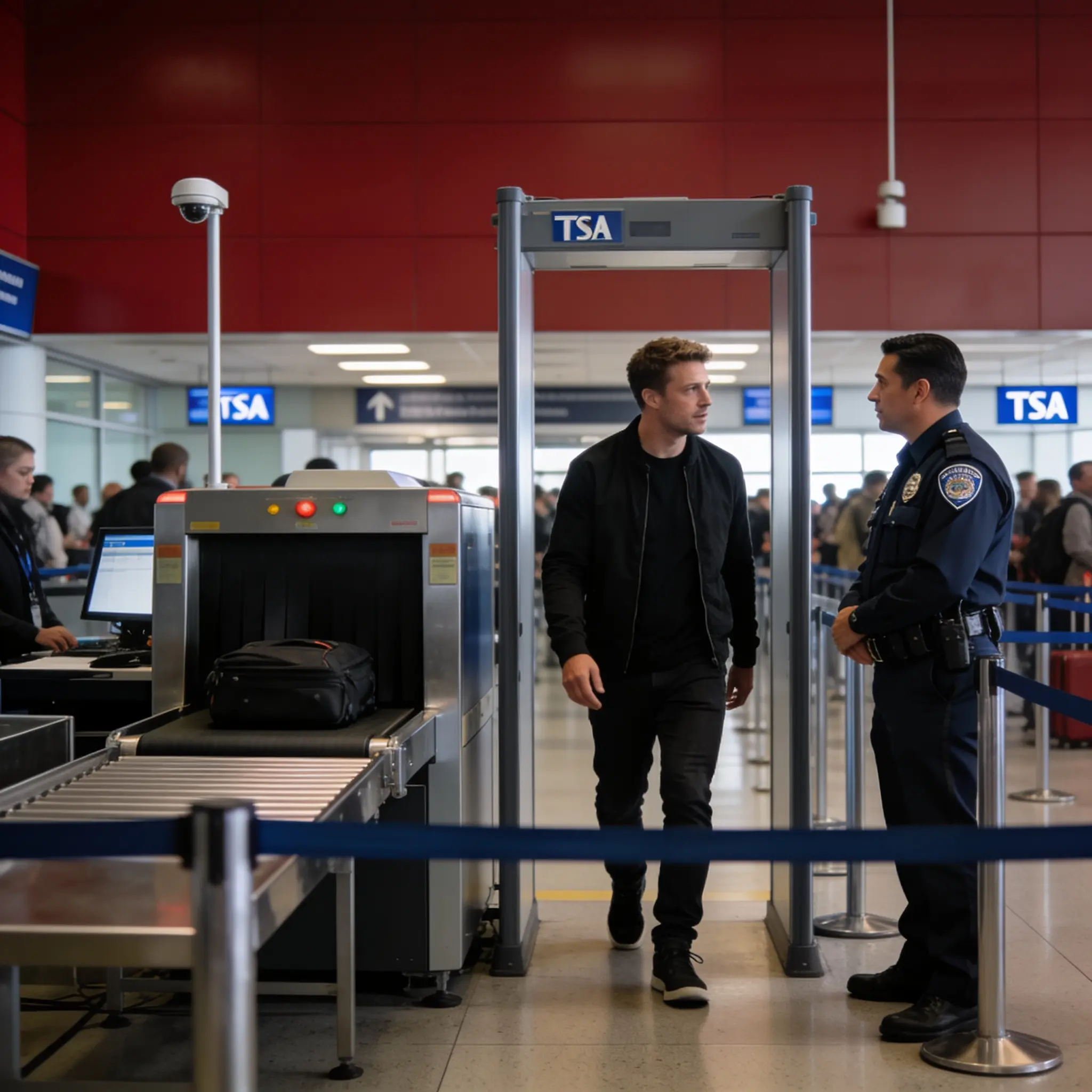

The TSA disability notification card is a free tool that helps you communicate medical needs at airport security. Most travelers don’t know it exists. You can download it right now and use it at any U.S. checkpoint. The card lets you discreetly tell TSA officers about conditions they can’t see, like diabetes, anxiety, or joint implants, without explaining yourself in a crowded line.
This guide shows you who qualifies for TSA disability card use, how to get your card in under five minutes, and precisely when to present it during screening. You’ll learn what the TSA Cares program offers, what to do when officers don’t respond properly, and how services like Rocket Records help you access this and other travel accommodations. By the end, you’ll know how to move through security with less stress and more control.
The TSA disability notification card works because it gives you a simple way to start the conversation. You don’t need approval. You don’t need documentation. You just need to know how to use it.
What Is the TSA Disability Notification Card and What Is It Used For
The TSA disability notification card is a free, voluntary tool that helps travelers communicate a disability, medical condition, or medical device that may affect security screening. You do not need TSA approval to use the card, but it is intended for travelers who have relevant health or screening information to communicate.
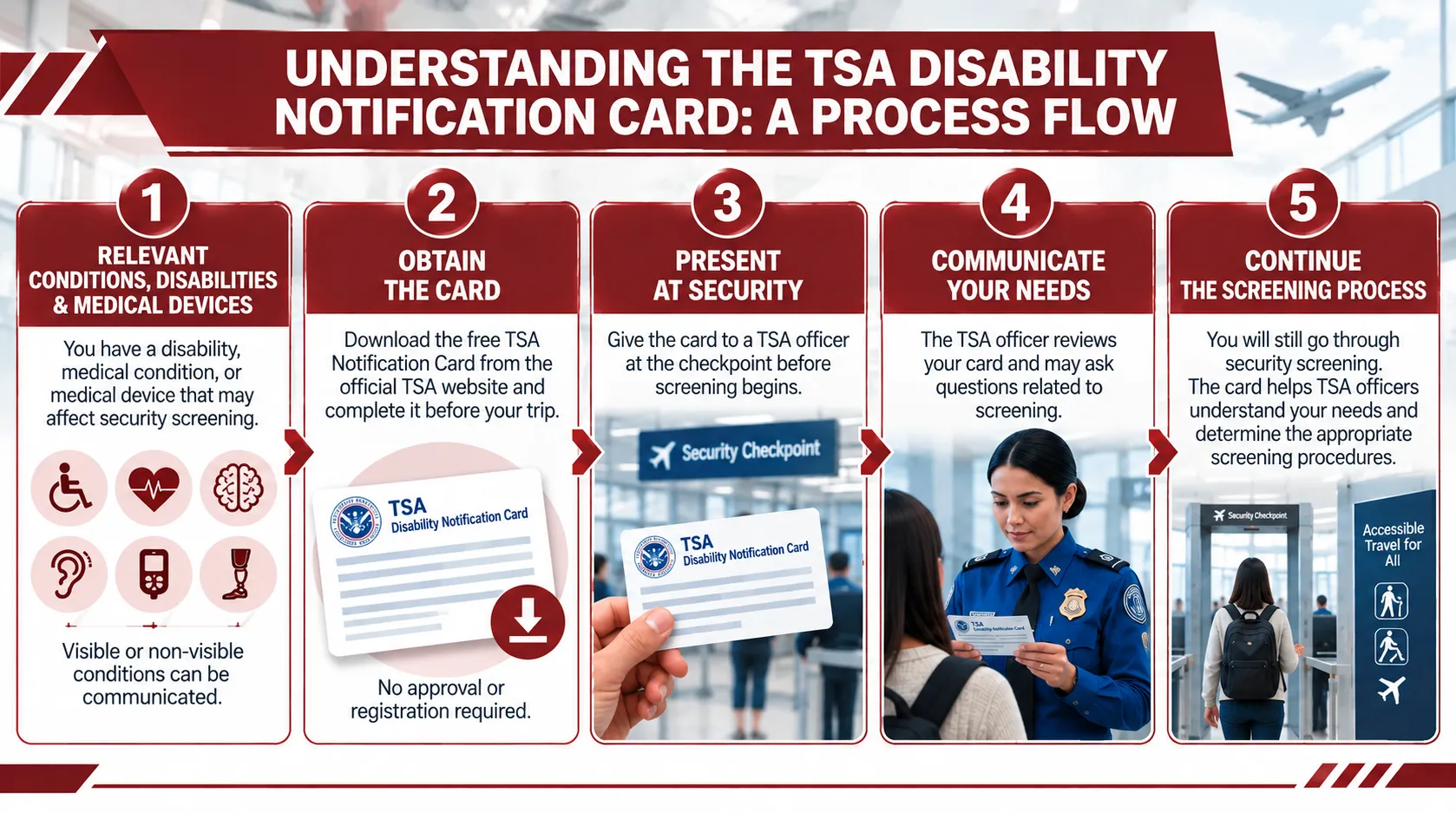
According to the TSA disability notification card guidance, the card allows you to discreetly inform officers about your situation before screening begins. This reduces stress and helps officers understand your needs without requiring you to explain your condition verbally in a crowded security line.
The card works as a communication bridge. You hand it to the TSA officer at the checkpoint. They read it and adjust their approach based on what you’ve shared. This simple step can make the entire screening process smoother and less overwhelming.
What the Card Communicates to TSA Officers
The card tells officers about your specific needs during screening. You can explain mobility limitations that affect how you move through the checkpoint. You can describe medical devices or implants that may trigger alarms. You can share sensory processing needs if loud noises or physical contact cause distress.
Communication preferences also belong on the card. If you’re nonverbal or have difficulty speaking under stress, the card explains this upfront. Officers then know to adjust how they give instructions or ask questions.
Other factors include insulin pumps, feeding tubes, ostomy bags, prosthetics, or any equipment that affects how you’re screened. The card gives you control over what information you share and when you share it.
What Information the Card Contains
You decide what goes on your card. There’s no required format or template. Most people include their name, a brief description of their condition or device, and what accommodations help them most.
-
Medical devices or implants (e.g., pacemaker, insulin pump, prosthetic limb)
-
Condition or disability (e.g., autism, diabetes, mobility impairment)
-
Information about how your health condition, disability, or medical device may affect screening
-
Communication needs (e.g., nonverbal, need extra time to process instructions)
You can print the official TSA Notification Card and bring it with you when you travel. Keeping a copy of the card on your phone may be useful for your records, but TSA does not state that digital and physical versions are accepted equally at every checkpoint.
Rocket Records’ TSA Note service can help you prepare your notification card and organize the information you want to communicate during screening.
What the Card Does Not Do
The card does not exempt you from screening. Every traveler goes through security regardless of disability status. The card does not guarantee specific accommodations. TSA officers use the information to adjust their approach, but they still follow standard security protocols.
It’s not a legal requirement for officers to follow. The card is a communication tool, not a binding document. Officers read it and use their training to accommodate your needs within security guidelines.
The card also doesn’t replace other disability services. TSA Cares offers additional support for travelers with disabilities, including dedicated passenger support specialists who can meet you at the checkpoint. The notification card works alongside these services, not instead of them.
Who Can Use a TSA Disability Notification Card in 2026
So, who qualifies for a TSA notification card? Anyone who wants to communicate a disability, medical condition, or screening-related need to TSA officers can use the notification card. You don’t need formal documentation. You don’t need to prove your condition. If you want to share something about your screening needs, you can use the card.
The card works for all types of disabilities. It covers visible conditions, invisible illnesses, cognitive needs, and medical devices. The card is a voluntary communication tool for travelers who have health, disability, or medical-device information that may affect their screening.
Travelers with Visible Physical Disabilities
Visible conditions that travelers commonly communicate include wheelchair use, prosthetic limbs, and canes or walkers. Limited mobility from arthritis or joint conditions also qualifies. Visible medical equipment like oxygen tanks or mobility aids fits this category too.
These travelers often use the card to explain how their equipment works. They can note if they can’t raise their arms overhead. They can mention if they need to remain seated during screening. The card prevents repeated verbal explanations at each checkpoint.
Travelers with Invisible Disabilities and Chronic Illnesses
Invisible conditions that travelers commonly communicate include diabetes requiring insulin pumps or continuous glucose monitors. Chronic pain conditions, PTSD, and anxiety disorders also qualify. Autism spectrum disorders and sensory processing disorders fit this category.
Heart conditions with pacemakers qualify for the card. Defibrillators also qualify for the card. Ostomy bags, feeding tubes, and any condition requiring medication or medical supplies count too. The card is particularly valuable for travelers whose disability or medical condition is not immediately apparent to TSA officers. It prevents the need to verbally explain sensitive information in a public security line.
Many travelers with invisible conditions use services like Rocket Records to identify other eligibility requirements for disability benefits they may qualify for beyond airport accommodations. This includes prescription assistance, tax credits, and healthcare coverage programs.
Travelers with Cognitive, Developmental, and Sensory Needs
Travelers with autism, Down syndrome, or other developmental disabilities benefit from the card. Those with sensory processing issues can explain their needs in advance. People with dementia or Alzheimer’s can have caregivers communicate on their behalf.
The card helps explain why someone might not respond to verbal instructions immediately. It can note if loud noises or bright lights cause distress. It allows travelers to request a quieter screening area when available.
Travelers with Medical Devices and Implants
Pacemakers, defibrillators, insulin pumps, cochlear implants, neurostimulators, and other medical devices may require specific screening procedures. Tell the TSA officer about your device before screening and follow the applicable screening instructions.
The card lets you explain your device or condition before screening starts. Tell the TSA officer about any relevant screening considerations, and follow the screening procedure TSA determines is appropriate.
How to Obtain Your TSA Disability Notification Card
Getting your TSA disability notification card is simple. You don’t need approval or registration. The card is free and ready to use right away.
Downloading and Filling Out the Card Template
The TSA provides a free Notification Card that you can download and complete before your trip.

Once you have the file, open it on your computer or phone. Fill in the fields with your information. Most people complete the card in under five minutes.
Third-party services offer fillable versions too. However, the official TSA template is always free and equally valid. No format gets acceptance from TSA. The official version is your best choice.
What Information to Include on Your Card
The card asks for your name and a brief description of your condition. You don’t need to share your diagnosis. General terms like “mobility disability” or “medical implant” work well.
You can also list specific screening needs. For example, you might note that you can’t raise your arms or that you use a wheelchair. This helps TSA officers understand your situation quickly.
The official card asks you to identify the health condition, disability, or medical device that may affect your screening. You can also explain relevant information verbally if needed.
Digital Versus Physical Card Options
The safest option is to bring a printed copy of the official TSA Notification Card with you when you travel.
Others prefer a printed card. You can print the PDF at home and laminate it for durability. Keep it in your wallet or travel documents so it’s always accessible.
Rocket Records can help you prepare a TSA Notification Card with the information relevant to your screening needs. The platform matches your health information to programs you qualify for in minutes.
Step-by-Step Guide to Using the Notification Card at Airport Security
Using a TSA disability notification card is simple. The process takes less than two minutes in most cases. You present the card at the right time, let the officer read it, and proceed with screening.
When and How to Present the Card During Screening
Present your notification card to the TSA officer at the document check podium. This happens before you enter the screening area. You can also hand it to the officer managing the metal detector or body scanner line.
The card works best when you present it early. This gives officers time to prepare accommodations before you reach the scanner. Keep the card accessible in your pocket or carry-on bag.
Some travelers with anxiety disorder accommodations find it helpful to present the card immediately upon approaching security. This reduces stress and sets clear expectations from the start.
What to Say and How TSA Officers May Respond
You don’t need to explain your condition in detail. Simply say “I have a notification card” or “I have a disability that affects screening.” The card communicates for you.
TSA officers will read your card and acknowledge your needs. They may provide the requested accommodation right away. In some cases, they’ll call a supervisor or passenger support specialist for additional coordination.
TSA officers handle your requests with care. They won’t ask invasive questions about your medical history. Your privacy stays protected during the process.
What Happens After You Present the Card
After reviewing your card, the officer will explain what happens next. They’ll ask if you have questions or additional needs before proceeding. This is your chance to clarify any concerns.
Common accommodations include:
-
Private screening in a separate area away from crowds
-
Modified pat-down procedures that respect your condition
-
Remaining seated during screening if standing is difficult
-
Hand inspection of medical devices instead of X-ray
-
Additional time to complete the process without rushing
The entire interaction takes 30 seconds to two minutes. Experiences vary by airport, checkpoint, and individual officer. Most travelers report smooth, respectful interactions when using the card.
TSA Cares Program and Additional Support for Travelers with Disabilities
The TSA Cares program offers dedicated support for travelers with disabilities who need extra help at airport security. This free service connects you with trained officers before your trip. It helps reduce stress and confusion at checkpoints.
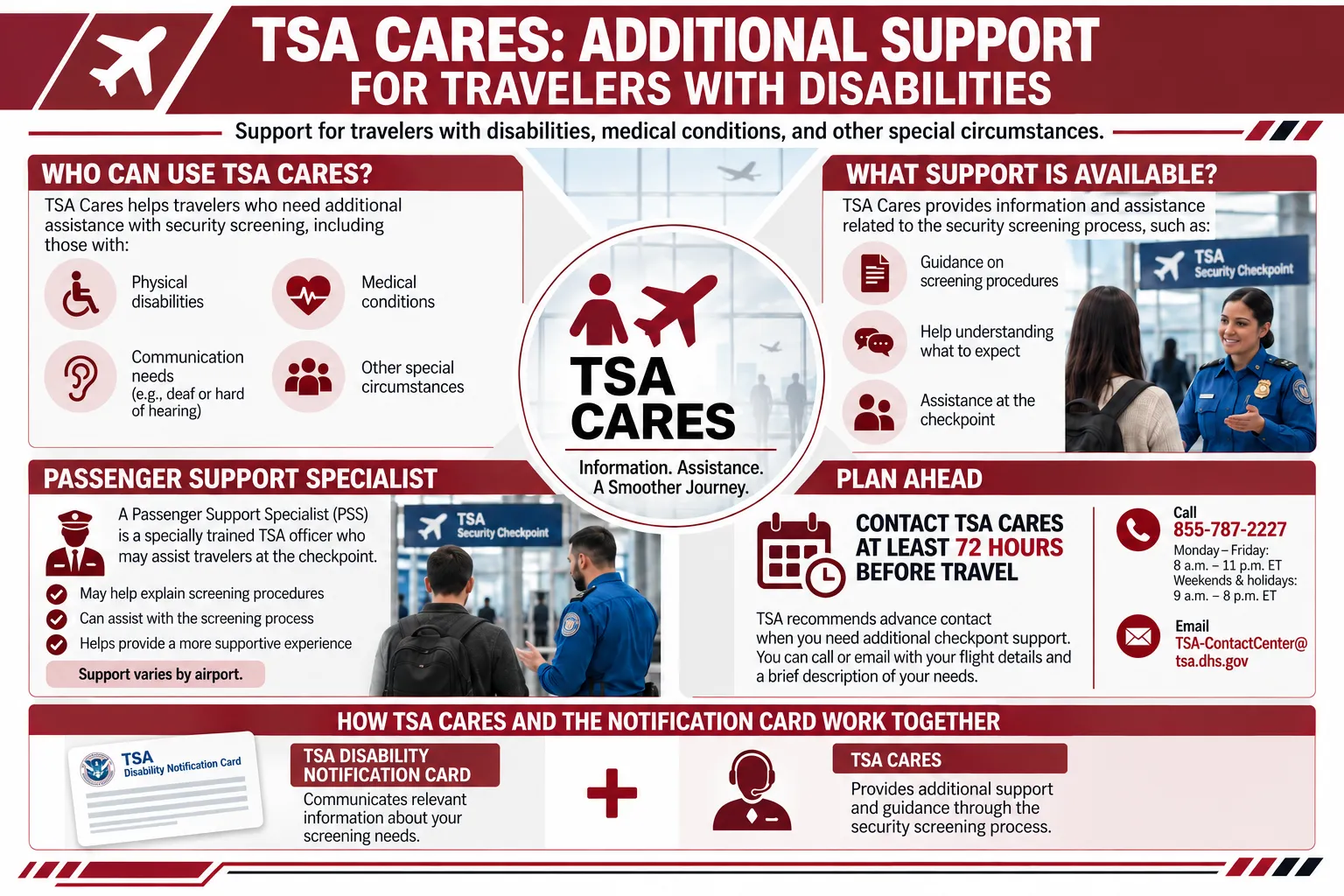
TSA Cares works alongside your TSA disability notification card. Many travelers use both tools together. The card provides quick visual communication while TSA Cares offers advance coordination.
What TSA Cares Provides as an Additional Support Option
TSA Cares is a helpline designed for travelers with disabilities, medical conditions, and special circumstances. You call ahead to request assistance through security screening. The program serves people with physical, cognitive, and invisible disabilities.
The service helps coordinate your screening experience. Officers can explain procedures before you arrive. They can arrange private screening if needed. This advance planning helps you know what to expect.
TSA Cares is especially helpful for several groups:
-
Travelers with complex medical equipment like insulin pumps or feeding tubes
-
People who are deaf or hard of hearing and need sign language interpretation
-
Travelers with cognitive disabilities who benefit from advance preparation
-
Anyone who has had negative screening experiences in the past
The program doesn’t exempt you from screening. It doesn’t guarantee specific accommodations. But it provides an extra layer of support and coordination.
How to Request a Passenger Support Specialist
Call TSA Cares at 855-787-2227 at least 72 hours before your flight. This advance notice lets TSA arrange a passenger support specialist for you. The specialist is a TSA officer with extra training in disability accommodation.
When you call, provide your flight details and describe your needs. Explain what assistance would help you most. Be specific about your disability or medical condition.
A Passenger Support Specialist may assist you at the checkpoint and help explain screening procedures. The type and level of support available can vary by airport. This continuity helps reduce confusion and anxiety, similar to how PTSD travel support programs help veterans manage airport stress.
These specialists coordinate private screening when appropriate. They explain each step before it happens. They can answer questions about what to expect. Their training focuses on respectful, effective communication with people who have various disabilities.
Advance Notification for Complex Medical Needs
Travelers with complex medical equipment benefit most from advance notification. Insulin pumps, continuous glucose monitors, feeding tubes, and oxygen equipment all require special handling. TSA Cares helps coordinate this before you arrive.
The 72-hour advance notice requirement gives TSA time to prepare. They can arrange for officers familiar with your specific equipment. They can coordinate with airport staff about accessible routes. This planning makes your screening smoother.
You can use your TSA disability notification card and TSA Cares together. Call ahead to arrange support. Then bring your card as a backup communication tool. This combination provides multiple layers of assistance.
TSA Cares operates Monday through Friday from 8 a.m. to 11 p.m. Eastern Time. Weekends and federal holidays have reduced hours. You can also email TSA-Contact [email protected] with questions about the program.
What to Do When Your Screening Needs Are Not Addressed
Not every TSA officer responds to a disability notification card the way you expect. Implementation varies widely across airports and checkpoints. Some officers may not recognize the card. Others may not adjust their screening approach despite seeing it.
This inconsistency doesn’t mean you lose your rights. You have clear options when screening doesn’t go as planned.
When TSA Officers Do Not Respond to Your Card
If an officer ignores your card or doesn’t accommodate your needs, stay calm. Ask to speak with a supervisor or passenger support specialist. You can make this request at any point during screening.
Use clear, direct language. Say: “I need to speak with a supervisor about my screening accommodation.” Don’t argue or raise your voice. This can delay your screening and make the situation worse.
According to the Department of Transportation, passengers with disabilities have the right to request assistance and accommodations during airport screening. If possible, ask for the supervisor’s name or badge number. Write it down immediately.
How to Advocate for Yourself Without Escalating Conflict
Focus on repeating your accommodation request calmly. Avoid emotional language or accusations. State what you need, not what the officer did wrong.
For example, say: “I need a private screening due to my medical device” instead of “You’re not listening to me.” Keep your tone neutral and professional.
If the situation feels tense, take a breath before responding. Your goal is to get through screening safely, not to win an argument. Document everything mentally as it happens so you can file a detailed report later.
Filing a Complaint After a Negative Screening Experience
Write down details immediately after screening ends. Record the date, time, airport name, and checkpoint number. Note officer names or badge numbers if you saw them.
File your complaint through the TSA Contact Center at tsa.gov/contact-center or call 866-289-9673. Include all documentation you collected. TSA reviews every complaint and uses them to improve officer training.
For serious violations, you can also file with the Department of Transportation Aviation Consumer Protection Division. If your rights faced repeated violations, talk to a disability rights lawyer. They can help you understand your legal options and next steps.
How Rocket Records Helps You Access TSA Notification Cards and Other Travel Benefits
Traveling with a disability can feel overwhelming. You need to manage medical devices, medications, and documentation while navigating security checkpoints. Rocket Records simplifies this process by identifying every travel-related benefit you qualify for based on your health profile.
Automated Benefit Matching for Travel Accommodations
Rocket Records scans your health information against thousands of programs. The platform helps you identify TSA notification card eligibility, airport wheelchair services, and airline pre-boarding rights in minutes. You don’t need to research each program separately or guess what you qualify for.
The system also flags accessible parking placards that work at airport parking facilities. Many travelers don’t realize their state-issued placard applies to airport lots. This saves time and reduces physical strain before your flight even begins.
According to the American Diabetes Association, travelers using insulin pumps and continuous glucose monitors face unique screening challenges at TSA checkpoints. Rocket Records helps you prepare the right documentation so security staff understands your medical needs without delay.
Documentation Support for Disability Travel Programs
Getting a TSA notification card requires specific medical information. Rocket Records guides you through what to include and how to present it effectively. The platform generates pre-filled forms based on your health profile.
You receive clear instructions for each accommodation. This includes what your doctor needs to certify and which agency handles your application. The service eliminates guesswork and reduces the back-and-forth with healthcare providers.
Tracking Multiple Travel-Related Benefits
Many travelers qualify for several overlapping accommodations. Rocket Records tracks all active benefits in one dashboard. You get reminders before anything lapses so you’re never caught without coverage before a trip.
This is valuable for people managing multiple conditions. You might qualify for TSA pre-screening, wheelchair assistance, and special meal accommodations simultaneously. The platform ensures you claim everything you’re entitled to without missing deadlines or renewal dates.
Rocket Records is fully HIPAA-compliant. Your medical information stays private and secure. The service does not share your data with airlines, TSA, or any third party without your explicit consent.
Conclusion
The TSA disability notification card gives you a simple way to communicate your needs at airport security. You don’t need approval to get one. You don’t need documentation to use it. The card works best when you pair it with other tools like the TSA Cares program for disabled travelers and passenger support specialists.
This guide covered what the card is and who can use it. You learned how to get your card and use it at checkpoints. You also discovered what to do when screening doesn’t go as planned. These steps help you travel with more confidence and less stress.
Your next move is to get your card and explore other benefits you qualify for. Many travelers miss programs that could save them money and make trips easier. Rocket Records finds these benefits based on your health profile and keeps everything organized in one place.
Visit Rocket Records today to take the free benefit eligibility check. You’ll get your TSA disability notification card and discover other travel accommodations you can claim right now.





 Ask ChatGPT
 Ask Claude
 Ask Perplexity