

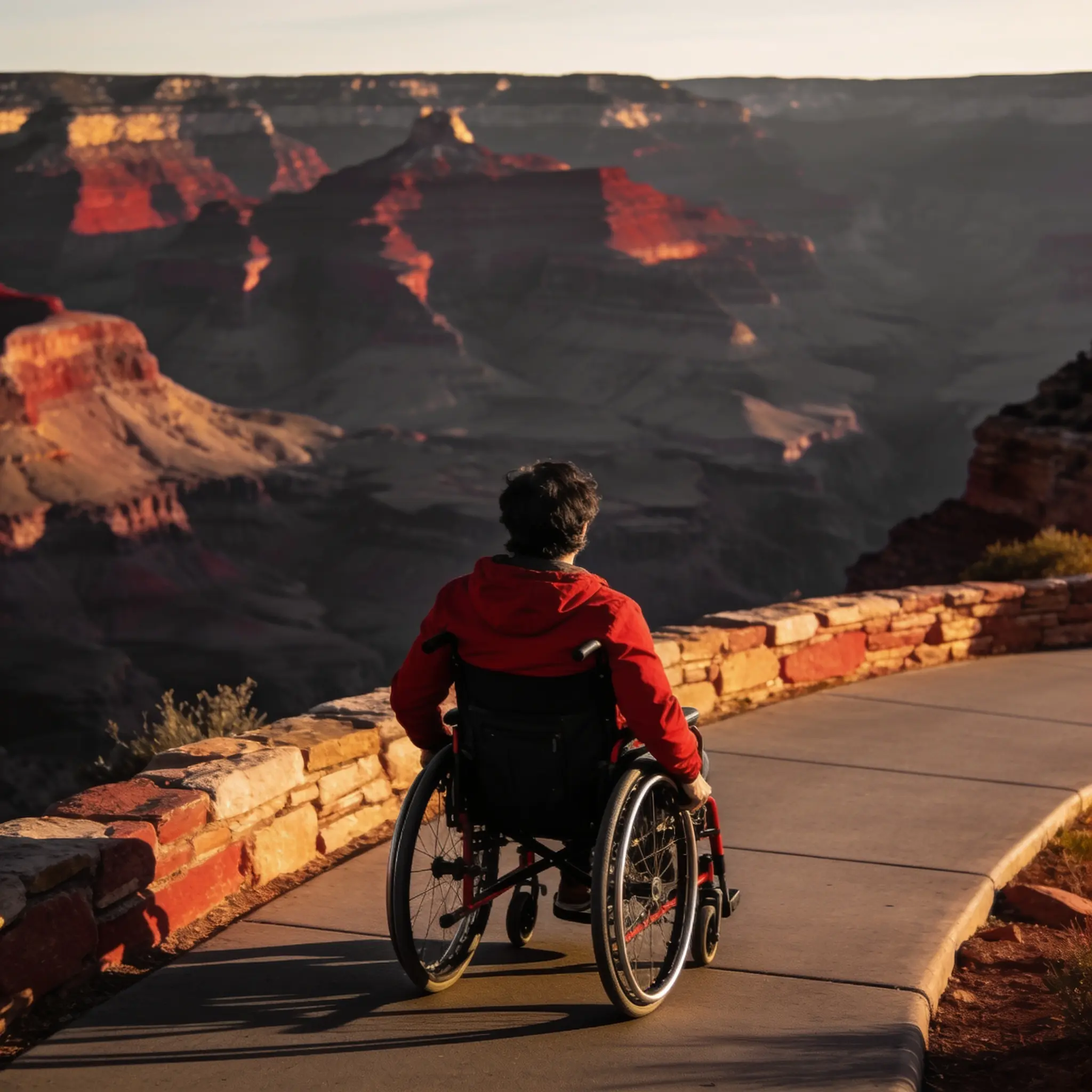

An Access Pass gives you free lifetime entry to more than 2,000 federal recreation sites across America. If you live with a permanent disability, this pass can save you hundreds of dollars each year on visits to national parks, forests, wildlife refuges, and recreation areas. You pay nothing for the pass itself. You pay nothing for entry after that.
Most people who qualify don’t know the America the Beautiful Access Pass exists. Others aren’t sure if their condition meets the requirements. The application process looks confusing at first glance. So thousands of eligible Americans miss out on this benefit simply because they don’t know where to start.
This guide walks you through everything you need. You’ll learn what the federal access pass covers, who qualifies based on permanent disability, and how to apply step by step. We’ll show you what the pass includes and what it doesn’t. You’ll also see how Rocket Records can help you apply for this and other related benefits all at once. By the end, you’ll know precisely how to get your Access Pass and start using it right away.
What Is the America the Beautiful Access Pass?
The America the Beautiful Access Pass is a lifetime federal recreation pass. It’s issued at no cost to U.S. citizens and permanent residents with permanent disabilities. This pass opens the door to more than 2,000 federal recreation sites across the country.
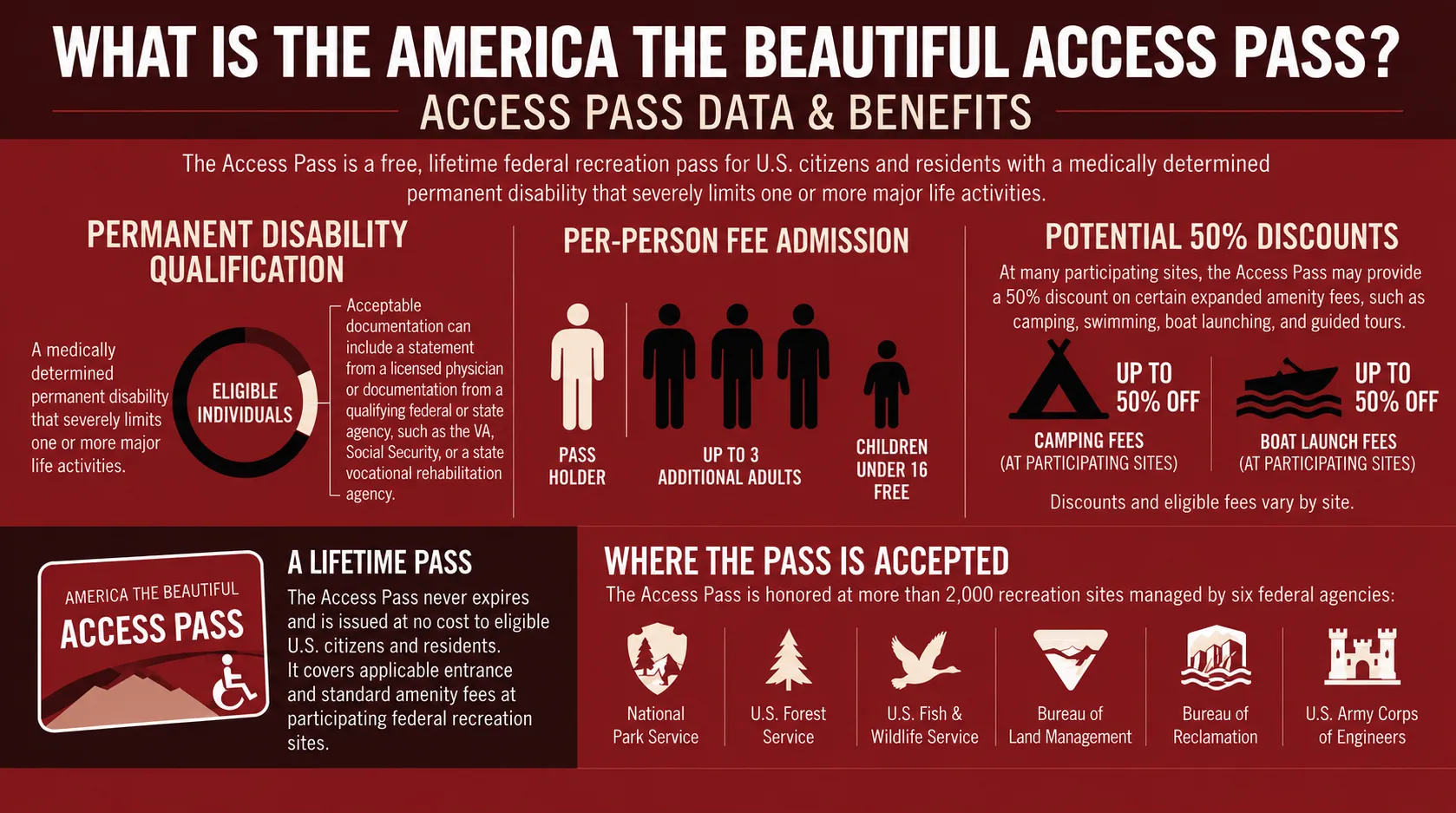
The pass provides access to more than 2,000 recreation sites managed by six federal agencies: the National Park Service, U.S. Forest Service, U.S. Fish and Wildlife Service, Bureau of Land Management, Bureau of Reclamation, and U.S. Army Corps of Engineers. You get access to some of the most beautiful outdoor spaces in America without paying standard entrance fees.
Legal Definition and Federal Authority
According to the National Park Service Access Pass program, this benefit is authorized under federal law. The Access Pass is available to people with a medically determined permanent disability that severely limits one or more major life activities.
The pass is issued by the National Park Service, U.S. Forest Service, Bureau of Land Management, U.S. Fish and Wildlife Service, and Bureau of Reclamation. These agencies work together to honor the pass at all participating sites. Acceptable documentation can include a statement from a licensed physician or documentation from a qualifying federal or state agency, such as the VA, Social Security, or a state vocational rehabilitation agency.
What the Access Pass Covers
The pass covers the pass holder and passengers in a single private vehicle at per-vehicle fee areas. At per-person fee areas, the pass covers the pass holder plus three adults. Children under 16 are admitted free regardless of pass status.
At many participating sites, the Access Pass may provide a 50% discount on certain expanded amenity fees. These can include:
-
Camping at designated campgrounds
-
Swimming at federal recreation sites
-
Boat launching at federal facilities
-
Certain guided or interpretive services at participating locations
That said, the pass does not cover fees charged by private concessionaires. Special recreation permits and activities managed by third-party operators within federal lands are also excluded. You’ll still pay full price for guided tours, equipment rentals, and lodging run by private companies.
Financial Value Over Time
The standard America the Beautiful Annual Pass costs $80 per year. The Access Pass is free and lasts a lifetime. Over 10 years, that’s $800 in saved entrance fees alone.
When you add the 50% discount on amenity fees, the value grows. At participating sites where an expanded amenity fee is eligible for the discount, the Access Pass may reduce that fee by 50%. These savings add up fast for people who use federal recreation sites regularly.
For more details on how to apply and what documentation you need, visit our America the Beautiful Access Pass service page.
Who Qualifies for an Access Pass Based on Permanent Disability?
The Access Pass offers lifetime free entry to federal recreation sites. But not everyone qualifies. You must meet specific federal disability criteria to receive this benefit.
Understanding who qualifies for disability benefits under federal law helps you determine if you’re eligible. The requirements are clear but often misunderstood.
ADA Definition of Permanent Disability
The Americans with Disabilities Act defines permanent disability as a physical or mental impairment. This impairment must limit one or more major life activities. It must also be expected to last indefinitely or result in death.
Major life activities include walking, seeing, hearing, speaking, breathing, learning, and working. The limitation must be substantial, not minor or temporary. This definition applies across all federal disability programs.
You must be a U.S. citizen or permanent resident to qualify. Age alone does not meet the criteria. The disability must genuinely affect your daily functioning.
Qualifying Health Conditions and Documentation
Several health conditions qualify for the Access Pass. Mobility impairments that affect walking or standing are common qualifiers. Visual or hearing impairments that limit daily activities also qualify.
Cognitive disabilities, chronic illnesses with complications, and mental health conditions can qualify too. Diabetes qualifies when complications arise. These include diabetic peripheral neuropathy, retinopathy, kidney disease, or cardiovascular issues.
The complications must limit mobility, vision, or other major life activities. Documentation is required from specific sources:
-
A statement from a licensed physician certifying your permanent disability
-
Proof of receiving federal disability benefits like SSI or SSDI
-
Certification from a state vocational rehabilitation agency
Your documentation must clearly show how your condition limits major life activities. Generic medical records are not enough. The certification must be specific and current.
What Permanent Means in This Context
Permanent means the condition is expected to last indefinitely. It does not mean the condition can never improve. It means there is no expected recovery date.
Temporary disabilities do not qualify for the Access Pass. A broken leg or short-term illness won’t meet the criteria. The condition must be ongoing and long-term.
Conditions that do not limit major life activities also fail to qualify. You might have a diagnosis, but if it doesn’t affect daily functioning, you won’t be eligible. The impact on your life matters more than the diagnosis itself.
Rocket Records helps users identify if their health conditions meet Access Pass eligibility requirements. The platform matches your health information to available programs in minutes. This saves you time and helps you claim benefits you may not know exist.
How to Apply for an America the Beautiful Access Pass
Getting your Access Pass requires completing a simple application process. You can apply in person at a participating federal recreation site, order a physical pass through USGS, or get a digital Access Pass through Recreation.gov.
Required Documentation and Proof
Physical-pass applications require the appropriate application information, a valid ID, and documentation of permanent disability. Acceptable documentation includes a signed statement from a licensed physician on letterhead. You can also submit an award letter showing receipt of SSI or SSDI benefits.
Another option is certification from a state vocational rehabilitation agency. The documentation must confirm that your condition is permanent. It should also show that your disability limits major life activities.
For people with diabetes, qualifying complications include diabetic peripheral neuropathy, diabetic retinopathy, or kidney disease. These conditions often meet the permanent disability standard. Your physician can provide the necessary statement on their letterhead.
In-Person Application Process
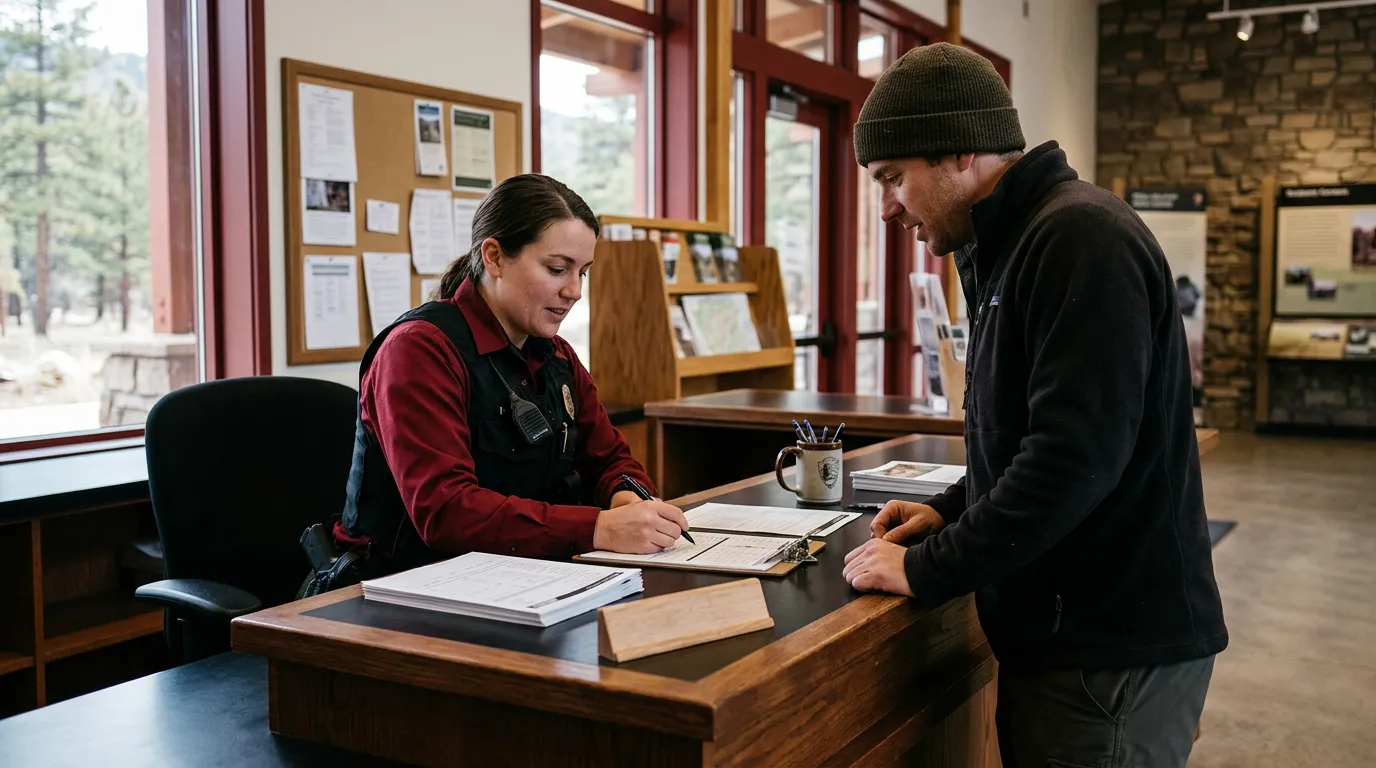
You can apply in person at participating federal recreation sites that issue Access Passes. Check the National Park Service pass pickup locations before visiting because locations may have limited hours or pass availability. Bring your completed Form NPS-1 and supporting documentation. Staff will verify your eligibility on the spot.
At participating federal recreation sites that issue Access Passes, you can apply in person with the required documentation. If the site issues the pass during your visit, you can use it once it is issued.
Most national parks, forests, and wildlife refuges process applications. Call ahead to confirm the site you plan to visit can issue passes. This saves you a wasted trip.
Mail Application Through USGS
Mail applications are submitted to the U.S. Geological Survey store. You need Form NPS-1, documentation, a passport-style photo, and a $12.50 processing fee. The fee consists of a $5 processing fee plus $7.50 handling fee.
Processing times for mail applications typically range from 3 to 4 weeks from the date the complete application is received. Make sure all required items are included. Missing documents will delay your application.
The pass is valid immediately upon issuance and does not expire as long as the holder remains a U.S. citizen or permanent resident. This makes it a lifetime benefit. You can also use it to help others access federal recreation sites at reduced rates.
Many people find that completing a disabled discount pass application through Rocket Records simplifies the entire process. The platform helps you gather the right documentation and submit everything correctly the first time.
What Benefits Does the Access Pass Actually Provide?
The Access Pass opens doors to thousands of federal recreation sites across the country. It covers national parks, national forests, wildlife refuges, and BLM recreation areas. You pay nothing to enter these locations when you show your pass.
This benefit extends beyond simple entry. You get access to some of the most beautiful natural spaces in America. Think Yellowstone, Yosemite, the Grand Canyon, and thousands of lesser-known gems.
Free Entry to Federal Recreation Sites
Your pass works at over 2,000 federal recreation sites nationwide. These include all national parks managed by the National Park Service. It also covers U.S. Forest Service sites, Fish and Wildlife Service refuges, and Bureau of Land Management areas.
The Access Pass is valid for the lifetime of the pass holder. The U.S. Forest Service honors the pass at participating sites where applicable entrance or standard amenity fees are charged. You don’t need to renew it annually or pay recurring fees.
50% Discount on Expanded Amenity Fees
Beyond free entry, you save 50% on many amenity fees. Camping fees drop by half at federal campgrounds. These fees typically range from $10 to $50 per night depending on location and facilities.
Other discounted services include:
-
Boat launch fees at federal recreation areas
-
Swimming area access fees
-
Certain guided or interpretive services at participating locations
-
Certain other expanded amenity fees, depending on the site
The discount applies only to fees charged by federal agencies. Private concessionaires operating within federal lands set their own rates. Your pass won’t reduce costs for lodging, private tours, or special use permits from third-party operators.
Vehicle and Companion Coverage Rules
At per-vehicle fee areas, the pass covers the pass holder and passengers in one private, noncommercial vehicle.
At per-person fee areas, the rules differ slightly. Your pass covers you plus three additional adults. Children under 16 always enter free at federal sites.
The pass does not provide priority access or reserved parking beyond standard accessible spaces. You can’t use it to make advance reservations or skip lines. It simply waives or reduces the fees you’d otherwise pay at the gate.
Access Pass vs. Other Federal Recreation Passes
The Access Pass is one of several federal recreation passes available to Americans. Each pass serves a different audience and offers different benefits. Understanding how they compare helps you choose the right option for your situation.
Senior Pass Comparison
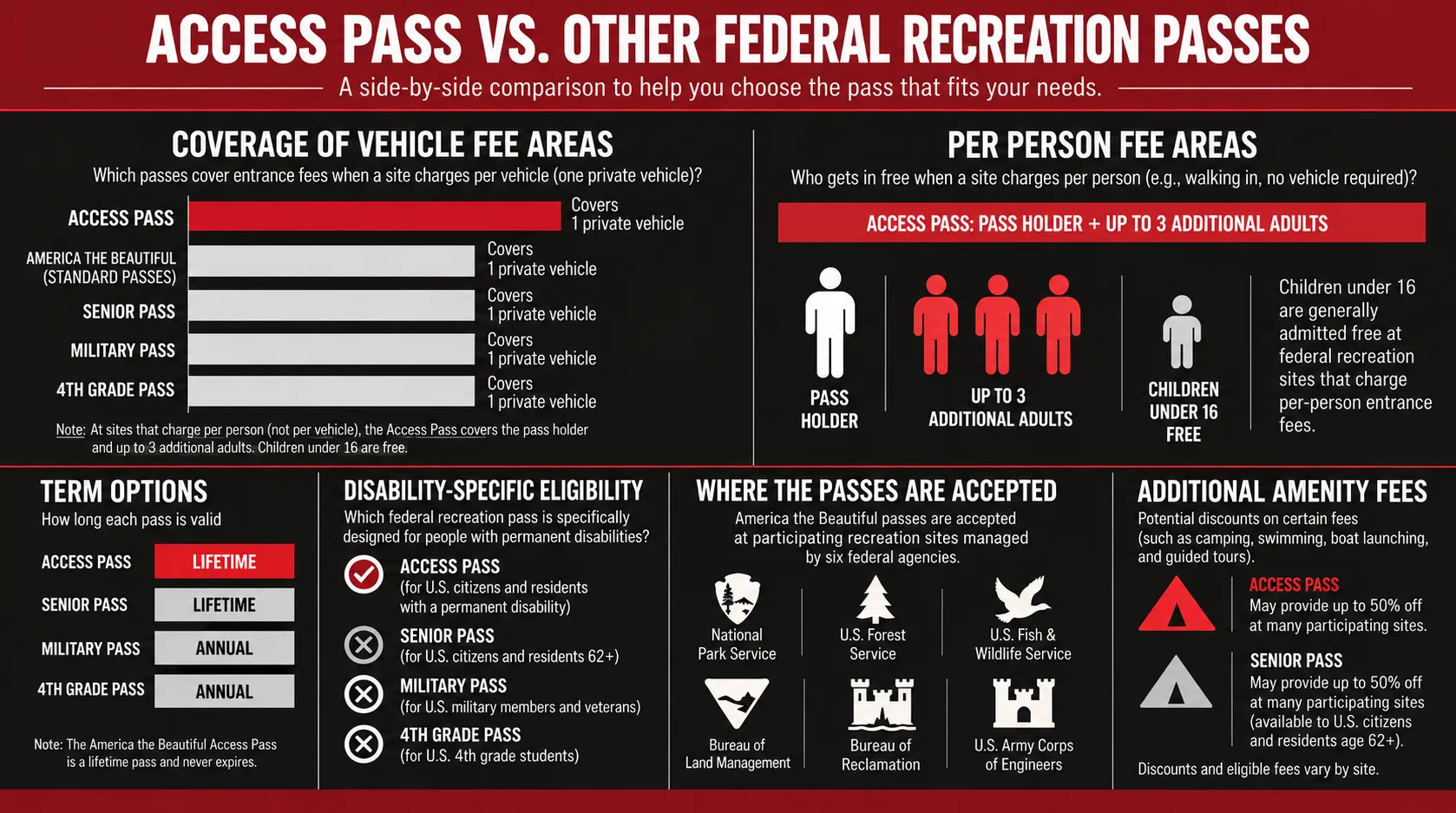
The America the Beautiful Senior Pass provides lifetime access to federal recreation sites for U.S. citizens age 62 and older. You can buy a lifetime pass for $80 or an annual pass for $20. The Senior Pass offers the same benefits as the Access Pass, including free entry and 50% discounts on amenity fees.
The key difference is cost and eligibility. The Senior Pass requires payment and is based on age rather than disability. If you qualify for both passes, the Access Pass is the better choice. You get the same benefits at no cost.
Annual Pass Comparison
The Annual Pass costs $80 and provides access for one year from the month of purchase. It covers the pass holder and passengers in a single vehicle at per-vehicle fee areas. At per-person fee areas, it covers the pass holder plus three adults.
The Annual Pass does not include the 50% discount on amenity fees that the Access Pass provides. For someone who visits federal recreation sites regularly, the Access Pass saves more money over time. The lifetime nature of the Access Pass means you never pay renewal fees.
Military Pass Comparison
The Military Annual Pass is available free to current U.S. military members and dependents. It provides the same coverage as the Annual Pass for one year. Active duty service members can get this pass by showing a Common Access Card or military ID at participating sites.
The Military Pass is an excellent option for active duty families. However, it requires annual renewal. Once you separate from military service, you no longer qualify. If you have a permanent disability, the Access Pass becomes your best long-term option.
Pass holders cannot hold multiple passes at the same time. Choosing the Access Pass means forgoing other pass types during the same period. For most people with permanent disabilities, the Access Pass is the most valuable option. It combines free lifetime access with the deepest discounts on amenities. Rocket Records helps you apply for the Access Pass and related benefits like parking placards for people with mobility limitations through a single platform.
How Rocket Records Helps You Apply for an Access Pass and Related Benefits
Applying for an Access Pass can feel overwhelming. You need the right forms, proper documentation, and knowledge of where to submit everything. Rocket Records simplifies this entire process by automating eligibility checks and preparing your paperwork in minutes.
Automated Eligibility Screening for Federal Passes
Rocket Records analyzes your health conditions and disability status against federal program requirements. The platform identifies Access Pass eligibility as part of its comprehensive benefit matching system. You answer a few questions about your condition, and the system cross-references your information with National Park Service criteria.
This automated screening saves hours of research. You don’t need to read through dense government websites or guess whether you qualify. The platform tells you exactly which passes you’re eligible for and why.
Beyond the Access Pass, Rocket Records identifies related federal recreation benefits you might not know exist. This includes state park passes, wildlife refuge permits, and other outdoor access programs tied to disability status.
Documentation Assistance and Form Preparation
Once eligibility is confirmed, Rocket Records generates pre-filled Form NPS-1 applications. The platform pulls information from your health records and auto-populates required fields. This reduces application time from hours to minutes.
The system also provides clear guidance on supporting documentation. According to the USGS Access Pass requirements, acceptable documentation can include a statement from a licensed physician or documentation from a qualifying federal or state agency. Rocket Records tells you exactly which documents to gather based on your situation.
For those who prefer in-person applications, the platform identifies the nearest federal recreation sites that issue passes immediately. You can also submit by mail with confidence, knowing your paperwork is complete and accurate.
Multi-Benefit Coordination Across Programs
The Access Pass is just one piece of a larger benefits puzzle. Rocket Records coordinates your application with related programs like handicap parking placards, Medicare coverage, prescription assistance, and property tax exemptions.
You can apply for multiple federal, state, and local benefits simultaneously from a single dashboard. The platform tracks application status across all programs and sends updates when action is needed. This prevents benefits from lapsing due to missed renewal deadlines.
Over 250,000 Rocket Records users have successfully verified eligibility for federal recreation passes through the platform. The average user unlocks seven or more programs worth over $12,450 per year in combined benefits.
Financial Impact: How Much an Access Pass Saves You
The Access Pass delivers real financial value that adds up fast. Most pass holders save money on every visit to federal recreation sites. The savings come from waived entrance fees, camping discounts, and reduced amenity charges.
Annual Savings Based on Usage Frequency
The average Access Pass holder saves $80 per year based on standard national park entrance fees. That number assumes moderate use across three to four visits annually. Frequent visitors save far more.
Entrance fees at popular national parks range from $15 to $35 per vehicle. A family visiting just three parks per year saves $45 to $105 on entrance fees alone. Visit five or six parks and your savings double. Keep in mind that Entrance and standard amenity fees vary by site, so your savings depend on where and how often you visit.
For people who visit federal recreation sites regularly, the Access Pass is one of the highest-value disability benefits available. According to qualifying disability conditions documentation from licensed physicians, the pass covers over 2,000 federal sites nationwide. This includes national parks, forests, wildlife refuges, and recreation areas.
Camping and Amenity Fee Discounts
Beyond entrance fees, the Access Pass provides a 50% discount on camping fees at most federal campgrounds. This saves $10 to $25 per night depending on the campground. Multi-day trips add up quickly.
Also, boat launch fees, swimming area access, and guided tour discounts can add another $50 to $200 in annual savings. The exact amount depends on your activity level and which sites you visit.
Lifetime Value Calculation
Over 20 years, the lifetime Access Pass represents a total value of $1,600 to $3,000 or more. This calculation assumes moderate usage patterns with three to five visits per year. Active outdoor enthusiasts see even higher returns. Keep in mind that the lifetime value of the Access Pass depends on how often you visit participating federal recreation sites and which covered fees you would otherwise pay.
The pass never expires. You pay nothing upfront and nothing to renew. For people managing diabetes or other qualifying conditions, this benefit provides decades of cost-free access to America’s most treasured outdoor spaces.
Conclusion
The America the Beautiful Access Pass offers lifetime free entry to over 2,000 federal sites. It also provides 50% discounts on camping and other amenities. If you have a permanent disability, this pass can save you hundreds or thousands of dollars.
You learned what the Access Pass covers and who qualifies. You saw how to apply in person or by mail. You discovered what benefits you get and how it compares to other passes. You also learned about coverage rules and common questions.
The application process is straightforward. You need Form NPS-1 and proof of your disability. You can get your pass the same day at any federal recreation site.
Start by checking whether you may qualify for the federal access pass. Gather the required documentation and apply through an official federal channel. Rocket Records can help you understand the eligibility requirements, organize your documentation, and explore other benefit programs you may qualify for. Take our free eligibility check to see what programs you may qualify for.






 Ask ChatGPT
 Ask Claude
 Ask Perplexity