



A reasonable accommodation letter is a formal written request. It asks your employer to modify your work conditions so you can perform your job despite a disability or medical condition. More than 61 million Americans live with a disability. Yet many never request the workplace accommodations they legally deserve. They don’t know how to ask or what documentation they need. Writing this letter can feel intimidating when you’re unsure what to include, how formal it needs to be, or what happens after you submit it.
This guide walks you through everything you need to know. You’ll learn what reasonable accommodation letters are and when you need one. You’ll also learn what to include in your request, how to submit it properly, what medical documentation employers can require, and how the interactive process works after submission. You’ll also find templates and examples you can adapt to your situation. Rocket Records provides workplace benefit documentation to support your request, but your employer makes the final decision on what accommodations they will approve.
What Is a Reasonable Accommodation Letter and When Do You Need One
A reasonable accommodation letter is a formal written request. It asks your employer to modify your job duties, work environment, or schedule. These changes help you perform your job despite a disability or medical condition. This document serves as an official record of your request and starts the process of finding solutions that work for both you and your employer.
Legal Definition Under the ADA
The Americans with Disabilities Act (ADA) requires employers with 15 or more employees to provide reasonable accommodations unless doing so would cause undue hardship. The law protects qualified individuals who can perform the essential functions of their job with or without accommodation.
An accommodation is considered reasonable when it removes barriers that prevent you from doing your work without creating excessive difficulty or expense for your employer. This includes understanding workplace benefits and protections available to workers under federal law.
When a Formal Letter Is Required vs. Verbal Requests
Verbal requests are legally valid under the ADA. However, written letters create a paper trail that protects both you and your employer, especially if disputes arise later. A formal letter becomes necessary when requesting modifications like schedule changes, specialized equipment, remote work arrangements, modified duties, or leave beyond standard sick time.
Written documentation proves you made the request, when you made it, and what you asked for. This matters if your employer later claims they never received your request or if you need to file a complaint.
Who Can Request Accommodations
You can request accommodations at any time. This includes during the hiring process, after starting a job, when a medical condition develops, or when your job duties change. You don’t need to wait for your employer to offer help.
Rocket Records provides workplace benefit documentation to support your accommodation request. This includes FMLA certification and medical documentation. Your employer decides what they will approve based on their policies and operational needs. The interactive process that follows your letter determines the final accommodation.
What to Include in Your Reasonable Accommodation Letter

Your letter creates a formal record that protects your rights and helps your employer understand what you need. Getting the content right from the start makes the process smoother for everyone involved.
Required Elements That Every Letter Must Contain
Every accommodation letter must include your name and position. It needs a clear statement that you’re requesting an accommodation under the ADA. Include a brief description of your functional limitation and the specific accommodation you’re requesting.
You do not need to disclose your diagnosis or detailed medical history in your initial letter. Focus on what you cannot do, not what condition you have. For example, write “I have difficulty standing for extended periods” rather than naming your specific back condition.
Optional Information That Strengthens Your Request
Explain how the accommodation will help you perform your job duties. If you’re requesting a modified schedule, note which tasks you’ll complete during your adjusted hours.
Include a statement noting your willingness to discuss alternative solutions. This shows good faith and opens the door to the interactive process. Many people use MyRocketRecords to obtain supporting documentation that strengthens their request without oversharing medical details.
Request a response within 30 days to establish a reasonable timeline for your employer’s decision.
What NOT to Include in Your Letter
Avoid excessive medical details, apologetic language, or statements suggesting you cannot perform your job even with accommodations. Don’t write “I’m sorry for the inconvenience” or “I know this is a burden.”
Skip information about anxiety disorder accommodations and related benefits unless directly related to your request. Similarly, details about mental health disability benefits beyond workplace modifications belong in separate conversations with HR.
Keep your tone professional and factual, focusing on solutions rather than problems.
Step-by-Step Process for Writing and Submitting Your Letter
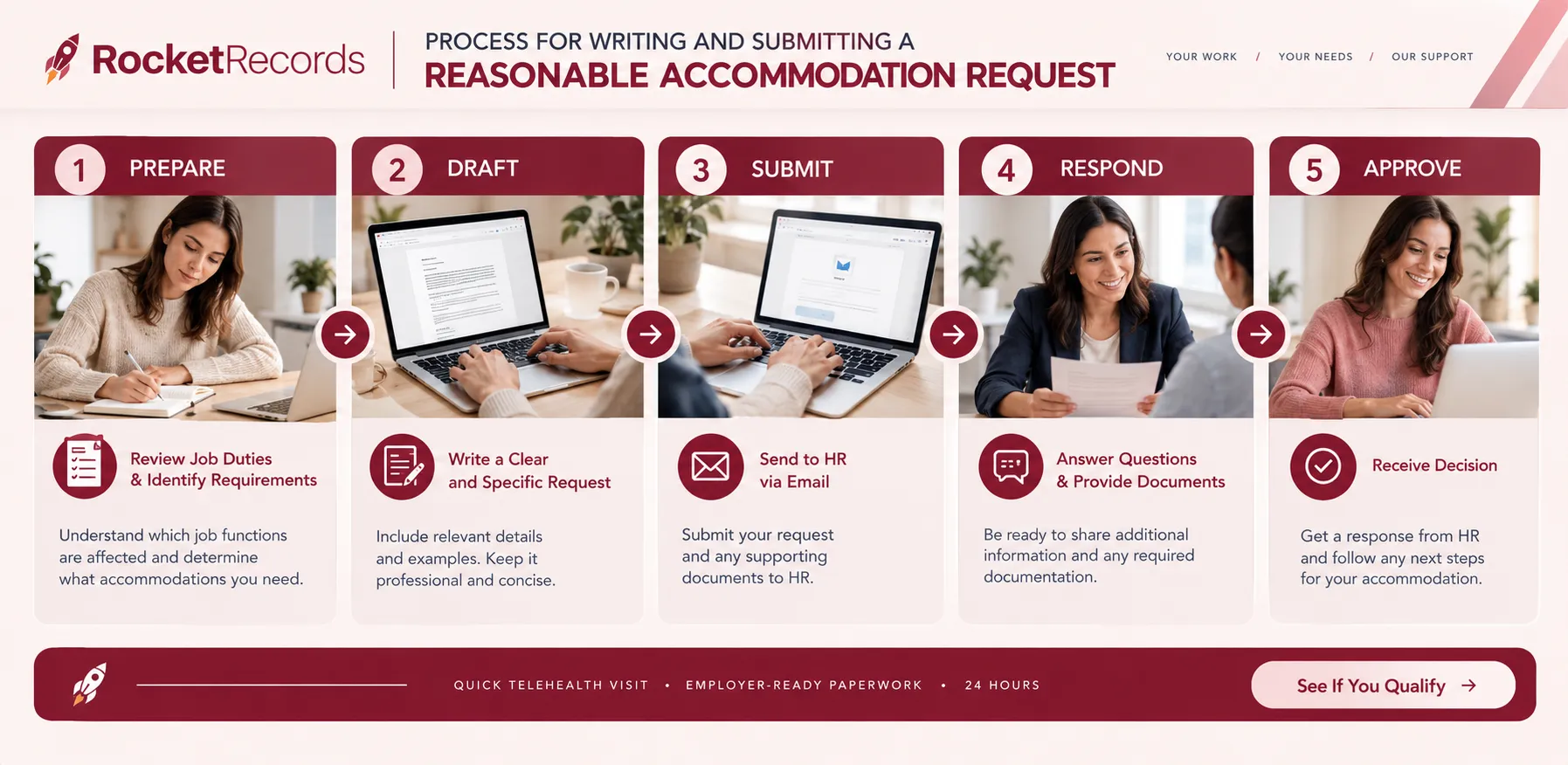
Before you draft your request, take time to prepare the information your employer will need. Review your job description to identify which specific duties require accommodation. Research what modifications have worked for others with similar limitations.
Consult with your healthcare provider about recommended accommodations. You may need supporting documentation later, so discuss this early. Your provider can help identify practical solutions that address your functional limitations without revealing unnecessary medical details.
Preparing Before You Write
Gather all relevant information before you start writing. List your current job responsibilities and note which tasks present challenges. Consider multiple accommodation options rather than just one, giving your employer flexibility during the interactive process.
Understanding how to request accommodations properly can help you avoid common mistakes that delay approval. Document any previous informal discussions about your needs.
Writing Your First Draft
Start with a clear subject line like “Request for Reasonable Accommodation Under the ADA” to ensure proper routing. State your request directly in the opening paragraph. Describe your functional limitations without disclosing your diagnosis.
Explain how the requested accommodation will help you perform your essential job duties. Keep the tone professional and solution-focused. Platforms like MyRocketRecords can provide workplace benefit documentation to support your request, though your employer makes the final approval decision.
Submission Methods and Documentation
Submit your letter to HR, your direct supervisor, or the person designated in your employee handbook. Send via email with read receipt, certified mail, or hand-deliver with a request for signed acknowledgment.
Keep a copy of your letter and document the submission date and method. This record protects you if disputes arise later. Like requests for anxiety disorder accommodations, your request should focus on functional limitations rather than medical labels.
Medical Documentation Requirements and Healthcare Provider Letters
Medical Documentation Requirements and Healthcare Provider Letters
Your employer can request medical documentation when your disability or need for accommodation is not obvious. If you have a visible condition or have already disclosed your diagnosis, additional documentation may not be necessary. The request must be reasonable and limited to information that confirms your need for the specific accommodation you requested.
A healthcare provider’s letter should confirm that you have a condition limiting a major life activity and explain the functional limitations you experience. According to Disability Rights Texas, the letter should recommend specific accommodations without disclosing your diagnosis or detailed medical history. Instead of stating “patient has severe anxiety disorder,” the letter might say something different. It could say “patient has a condition that makes it difficult to concentrate in noisy environments and would benefit from a quiet workspace.”
When Employers Can Request Medical Documentation
Employers cannot request medical records for every accommodation. They can only ask for documentation when the disability and need for accommodation are not apparent.
The request must be job-related and consistent with business necessity. Your employer cannot ask for your entire medical history or unrelated health information.
What Your Doctor’s Letter Should Include
You can provide a template to your healthcare provider that includes only the information your employer legally needs. A licensed clinician writes the letter after reviewing your medical records to ensure the documentation supports your accommodation request.
The letter should focus on what you can and cannot do, not on your diagnosis. It should explain how the recommended accommodation will help you perform your essential job duties. For conditions like depression or anxiety, understanding mental health disability benefits can help you identify what documentation may be most effective.
Protecting Your Privacy During the Documentation Process
Medical documentation should go directly to HR or a designated medical review person, not your direct supervisor. This protects your privacy and ensures that sensitive health information remains confidential.
You need the form or request your employer asked for, plus the medical records that support it, before a clinician can complete the documentation. Keep copies of everything you submit and document when and how you delivered the information.
Understanding the Interactive Process After Submission

After you submit your accommodation request, your employer must engage in an interactive process. This back-and-forth dialogue helps identify effective accommodations that work for both parties.
What Happens During the 30-60 Day Review Period
Employers typically respond within 7 to 14 business days of receiving your request. For complex situations, responses may take longer, and your employer should communicate if they need additional time.
The Job Accommodation Network provides guidance on recognizing accommodation requests and how employers should respond to them. Your employer will review your request, assess operational needs, and determine what accommodations they can provide.
During this period, HR may consult with your supervisor, review your job duties, and research available solutions. They might also reach out to their legal team or accommodation specialists.
How to Respond to Employer Questions and Counteroffers
Your employer may ask clarifying questions about your limitations or request medical documentation. Answer honestly and provide requested information promptly.
If your employer proposes an alternative accommodation, evaluate whether it effectively addresses your needs. You are not required to accept the first offer if it does not work, but you must engage in good faith discussions.
Suppose you requested full remote work, but your employer offers a hybrid schedule with three days at home. Consider whether that arrangement would still help you perform your job duties. Be open to alternatives while ensuring your needs are met.
Documenting All Communications
Keep detailed records of every conversation, meeting, and email exchange during the interactive process. Note dates, participants, and what was discussed or decided.
Save copies of all written correspondence. If you have phone conversations or in-person meetings, follow up with an email summarizing what was discussed.
If your employer stops responding or refuses to engage in the process, this may constitute a violation of the ADA. Your documentation becomes critical evidence if you need to file a complaint or pursue legal action.
Common Accommodation Requests by Condition Type
Understanding what accommodations others request can help you identify what might work for your situation. The type of accommodation you need depends on your functional limitations, not your diagnosis.
Remember that each request should be tailored to how your condition affects your ability to perform your job, rather than simply listing your medical diagnosis.
Physical Disabilities and Mobility Accommodations
Physical accommodations often address workspace access and equipment needs. These may include ergonomic equipment like adjustable desks or specialized chairs. Modified workstations with proper lighting or space configuration are common. Assistive technology such as screen readers or voice recognition software also helps.
According to the Northwest ADA Center, parking modifications represent one of the most common physical accommodations. These include reserved spots closer to entrances or covered parking areas. Elevator access, ramps, and automatic door openers also fall into this category.
Mental Health and Cognitive Accommodations
Mental health accommodations focus on work environment and schedule modifications. These frequently include flexible scheduling to attend therapy appointments. Quiet workspaces away from high-traffic areas help many people. Permission to take short breaks throughout the day and remote work options when office environments trigger symptoms are also common.
For ADHD and autism, accommodations might include written instructions instead of verbal directions. Noise-canceling headphones reduce sensory overload. Modified meeting formats that allow advance agendas or deadline flexibility for complex projects also help.
Chronic Illness and Invisible Disability Accommodations
Chronic illness accommodations address fluctuating symptoms and medical needs. The Department of Labor confirms that employers must provide reasonable modifications for conditions that limit major life activities, even when those conditions are not visible.
Common requests include flexible schedules for medical appointments, additional sick leave beyond standard policies, and work-from-home options during symptom flare-ups. Long COVID accommodations often involve reduced hours and frequent rest breaks. Remote work helps avoid exposure risks. Modified physical demands like reduced standing or lifting requirements are also common.
Conclusion
A reasonable accommodation letter is your starting point for getting the workplace modifications you need to do your job well. The process works best when you’re clear about what you need, provide the right documentation, and stay open to discussing solutions with your employer.
Start by writing a focused letter that describes your functional limitations and the specific changes you’re requesting. Submit it to HR or the person designated in your employee handbook, and keep a copy for your records. Be ready to participate in the interactive process, where you and your employer work together to find accommodations that address your needs while fitting their operational requirements. Remember that your employer makes the final decision about which accommodations they’ll approve.
If you need help getting the medical documentation your employer requires, Rocket Records connects you with licensed clinicians who review your records and complete the forms employers ask for. We help you document your request, but your employer decides what they’ll approve.
Get started with Rocket Records today to begin your accommodation request process.






 Ask ChatGPT
 Ask Claude
 Ask Perplexity