


Over 2,000 federal recreation sites across America offer free entry. People with permanent disabilities get lifetime access. The National Parks Access Pass program grants this benefit. Yet millions of eligible Americans never claim this benefit. Many people find the application process hard. They don’t know what papers to send. They don’t know if their condition qualifies. This guide walks you through every step of applying for your National Parks Access Pass in 2026. You’ll learn what qualifies you for the pass. You’ll find out how to gather medical files. You’ll discover where to send your application. We cover common mistakes that get applications rejected and show you how to use your pass at federal recreation sites nationwide.
You’ll also discover how Rocket Records can match your health information to this and other benefits you might be missing. It also helps you prepare the medical forms you need. It guides you through each step of the process. The National Park Service or another participating federal agency issues the final pass.
What Is the National Parks Access Pass and Who Qualifies?
The National Parks Access Pass is a free lifetime pass that provides entry to over 2,000 federal recreation sites. This includes national parks, forests, wildlife refuges, and Bureau of Land Management lands. U.S. citizens or permanent residents with permanent disabilities qualify regardless of age. The pass also provides a 50% discount on expanded amenity fees such as camping, swimming, and boat launching at many federal sites.
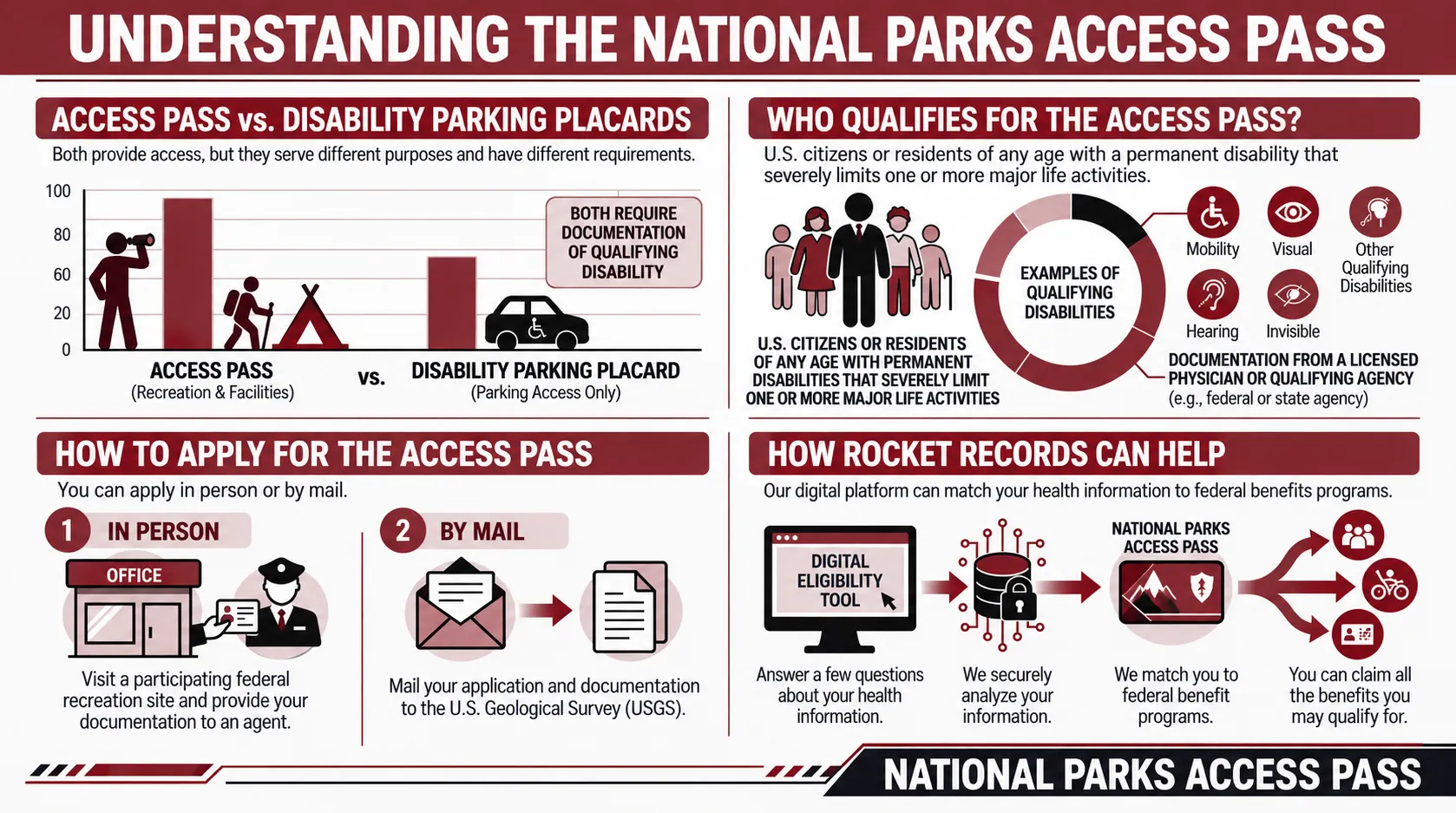
The pass works similarly to disability parking placards for accessible parking in that both require documentation of a qualifying disability. The Access Pass gives you outdoor recreation access. It does not provide parking access. You can obtain the pass in person at participating federal recreation sites or by mail through the U.S. Geological Survey.
Legal Definition of Permanent Disability for Access Pass Purposes
Permanent disability means a condition that severely limits one or more major life activities. The condition must last for the rest of your life. Major life activities include walking, seeing, hearing, speaking, breathing, learning, and working.
The National Park Service doesn’t require a specific diagnosis. Instead, they focus on how your condition affects your daily functioning. This approach makes the pass accessible to people with a wide range of conditions. The key factor is permanent functional limitation, not the medical label attached to your condition.
Also, the definition covers both visible and invisible disabilities. Chronic pain conditions, cardiovascular limitations, and respiratory conditions can all qualify. The pass recognizes that disability takes many forms beyond mobility impairments.
Conditions That May Qualify Based on Their Functional Limitations
Your functional limits matter more than your specific diagnosis. Diabetes with complications such as peripheral neuropathy, retinopathy, or cardiovascular disease may qualify. What matters most is how these issues affect you. Can you walk far? Can you handle rough ground? Can you do hard work?
Arthritis, back conditions, or joint problems can qualify. These mobility issues must meet Access Pass disability rules. Vision or hearing loss may qualify when the disability severely limits one or more major life activities. Chronic pain conditions may qualify when they meet the Access Pass disability requirements. Respiratory conditions like COPD or severe asthma can qualify. They must meet the Access Pass disability rules.
Beyond that, cardiovascular conditions that restrict physical activity may qualify. Neurological conditions affect balance, coordination, or stamina. They can qualify for an Access Pass. They must meet the disability rules. Mental health conditions can qualify when they substantially limit major life activities. The focus remains on how your condition affects your ability to function, not on the diagnosis itself.
Documentation Requirements to Prove Eligibility
Acceptable documentation includes a statement from a licensed physician confirming your permanent disability. The Social Security Administration can provide proof of your disability. This proof works if it shows you get disability benefits. State agency disability verification documents are also accepted. Veterans Affairs disability rating letters work for veterans with service-connected disabilities.
Your physician’s statement must confirm that you have a permanent disability. It should describe how the condition substantially limits one or more major life activities. The statement doesn’t need extensive medical detail. A doctor must sign a statement that confirms the disability is permanent. The statement must show how it limits one or more major life tasks. The doctor must describe what those limits are.
In addition, you can apply in person at any federal recreation site that issues the pass. Bring your documentation and a form of identification. You get the pass right away after staff checks your papers. If applying by mail, you’ll need to submit copies of your documentation along with the application form. Processing typically takes two to four weeks.
The National Park Passes service through Rocket Records helps users determine eligibility and prepare the necessary documentation. The platform matches your health information to this and other federal benefits programs. This streamlines the application process and ensures you claim all benefits you qualify for at once.
Access Pass vs. the Annual America the Beautiful Pass
The Access Pass and the America the Beautiful Annual Pass are different federal recreation passes. The Access Pass is free for eligible people with a permanent disability that severely limits one or more major life activities, and it is valid for life. The Annual Pass is a paid pass available to the general public and is valid for one year.
Both passes can provide access to participating federal recreation sites, but they serve different groups. The Access Pass serves people with disabilities. The Annual Pass serves visitors who want one year of access.
If you qualify for the Access Pass, you do not need to purchase the Annual Pass to receive the Access Pass benefits. Rocket Records can help eligible users prepare the medical documentation needed for an America the Beautiful Access Pass, while the appropriate federal agency issues the pass.
Step-by-Step Application Process for Your Access Pass
Getting your National Parks Access Pass takes just a few clear steps. You can apply in person or by mail. Both methods work well. The choice depends on how quickly you need the pass.
Here’s what you need to do.
Confirm Your Disability Eligibility
First, check if your condition qualifies. The Access Pass covers permanent disabilities that severely limit one or more major life activities. This includes walking, seeing, hearing, breathing, or performing manual tasks.
Your disability must be permanent. Temporary conditions don’t qualify. Think about how your condition affects daily tasks. Does it limit mobility or self-care? Does it restrict your ability to work or communicate?
Most people with qualifying conditions already know they meet the standard. You may use federal disability benefit papers as proof. The federal agency that pays your benefits can provide this proof.
Gather Required Photo Identification
Next, collect your government-issued photo ID. A driver’s license works perfectly. So does a passport or state ID card.
The ID must show your current legal name. It must also include a clear photo. Expired IDs won’t work. Make sure yours is current before you apply.
This step is simple but required. The National Park Service uses your ID to verify your identity. They also use it to create your personalized pass card.
Gather Medical Documentation
Then, prepare your medical documentation. You need proof of your permanent disability status. Several types of documents work for this purpose.
According to the USGS application process, acceptable documentation includes a signed statement from a licensed physician, proof of receiving federal disability benefits, or documentation from a state vocational rehabilitation agency. VA disability determination letters also qualify.
Your doctor’s statement should confirm your condition is permanent. It should also explain how it limits major life activities. Keep the language clear and specific. Vague descriptions may delay your application.
Many applicants use their Social Security award letter. This document proves disability status without needing a separate medical form. It speeds up the process significantly.
Submit Through NPS or an Issuing Federal Recreation Site
Finally, choose your submission method. In-person applications happen at any participating federal recreation site. This includes national parks, forests, and wildlife refuges. You walk in with your documents. Staff reviews them on the spot. You leave with your pass the same day.
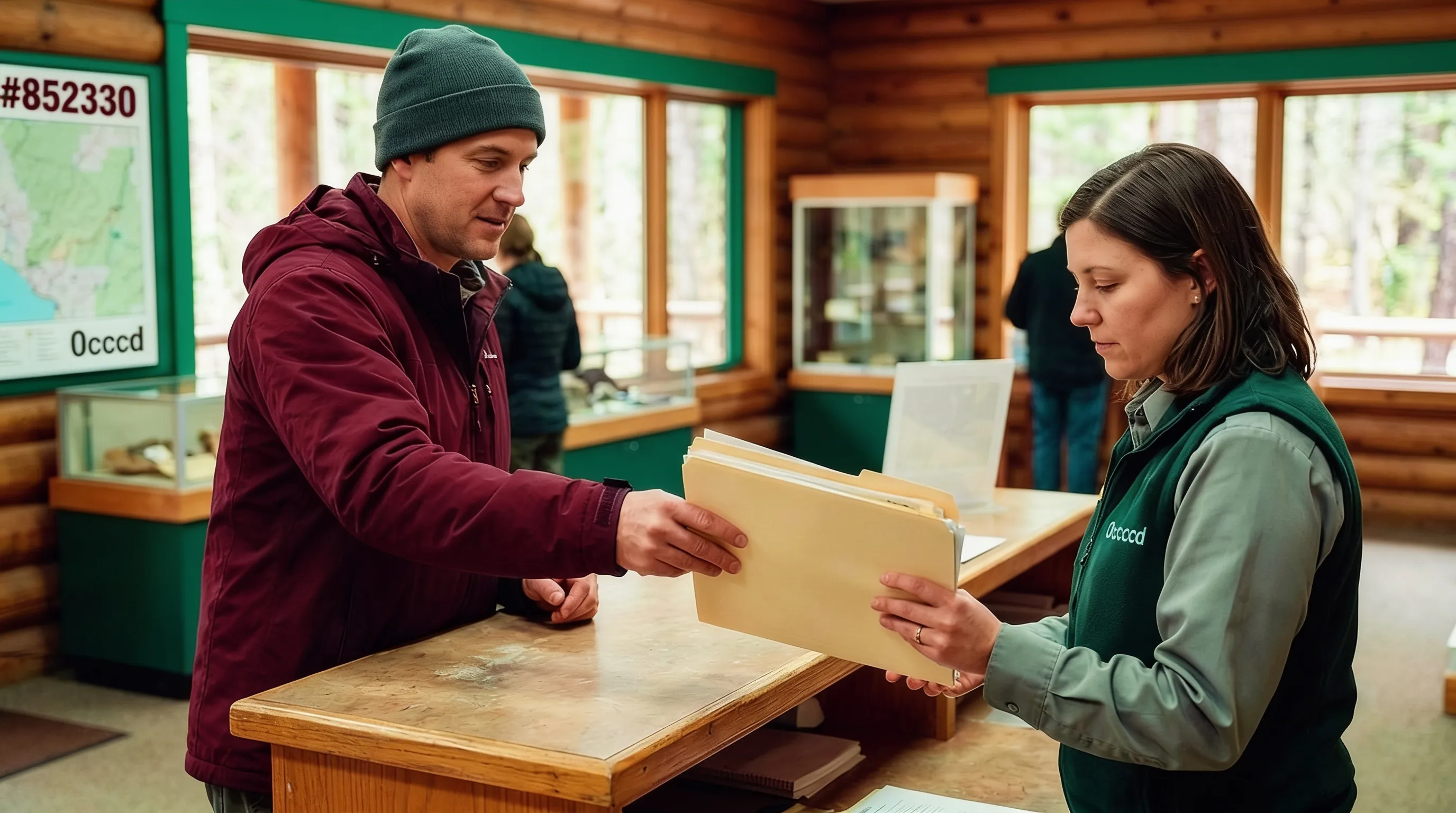
Mail applications go through the USGS Store. You complete the application form online or by mail. You send copies of your ID and medical documentation. Processing takes three to four weeks. The pass arrives by mail as a plastic card.
It’s valid for life at over 2,000 federal recreation sites. You also get a 50% discount on camping, swimming, and boat launch fees at many locations.
For those who need help with the medical documentation, Rocket Records can assist with the documentation required for an Access Pass application. They help you gather the right documents and submit everything correctly the first time.
In-person applications work best if you live near a federal site. Mail applications suit people who prefer handling everything from home. Both methods result in the same lifetime pass.
What Your Access Pass Covers and How to Use It
The National Parks Access Pass opens doors to thousands of federal recreation sites across the country. It covers applicable entrance fees at participating federal recreation sites. It also covers standard amenity fees at national forests and grasslands. The pass covers day use fees at most federal recreation sites.
This pass is free for U.S. citizens and permanent residents with permanent disabilities. It never expires. You don’t need to renew it.
Free Entry Benefits at Federal Recreation Sites
At sites that charge per vehicle, the Access Pass covers the pass holder and passengers in the same private, non-commercial vehicle. At sites that charge per person, the pass covers the pass holder and up to three additional adults. Children under 16 get in free.
According to the Forest Service pass benefits documentation, the pass covers entrance fees at over 2,000 federal recreation sites. The pass works at national parks. It works at national wildlife refuges. It works at national forests. It works at Bureau of Land Management areas. You get standard amenity fees waived when you show your pass.
The pass works at iconic destinations like Yellowstone, Yosemite, and the Grand Canyon. It also covers lesser-known gems like national grasslands and wildlife refuges. The pass provides the applicable fee benefits at participating federal recreation sites.
50% Discount on Expanded Amenity Fees
At many participating sites, the Access Pass provides a 50% discount on certain expanded amenity fees. These discounts apply to camping, swimming, boat launching, and specialized interpretive services. The savings add up quickly if you camp regularly or use recreational facilities. You can also learn more about the disabled discount pass and other disability-related savings available through Rocket Records.
For example, a campsite that costs $30 per night drops to $15 with your Access Pass. Boat launch fees that run $10 each become $5 each. Keep in mind that actual fees and discounts vary by location and service. These discounts make outdoor recreation significantly more affordable for people managing health conditions.
Not every site offers the same amenities or discounts. Call ahead to confirm which services are available and discounted at your destination. Most park websites list current fees and discount policies.
Sites and Services Not Covered by the Pass
The Access Pass doesn’t cover everything. Timed entry reservations at popular parks require separate fees. Special use permits for activities like backcountry camping or climbing also cost extra. Concessionaire fees for lodging, tours, and equipment rentals are not included.
Some state parks honor the federal Access Pass, but many don’t. State park systems operate independently and set their own fee structures. Check with individual state parks before assuming your pass will work.
Private concessionaires run guided tours inside parks. They also run equipment rentals and food services. Your pass won’t reduce these costs. Budget separately for meals, gear, and specialized activities.
To use your pass, present it at entrance stations or fee collection points. You’ll need to show photo ID for verification. Park staff will check that the name on your ID matches the name on your pass. This prevents unauthorized use and protects the program for people who genuinely need it.
Many people don’t realize how Rocket Records simplifies benefit applications by matching your health information to available programs in minutes. The platform finds federal recreation passes for you. It also finds other benefits based on your disability status.
How to Get Medical Documentation for the Access Pass
To get medical docs for the National Parks Access Pass, gather proof first. Your proof must show your condition meets federal disability rules. You need records that show your disability is permanent. They must also show it limits major life activities.
The process involves four main steps. First, you upload existing medical records. Then, a licensed physician reviews and certifies your status. Next, you receive certified documentation. Finally, you submit everything to the issuing agency.
Uploading Medical Records to Establish Disability Status
Start by collecting medical records that document your condition. These records should describe how your disability affects daily activities. Include test results, treatment notes, and specialist evaluations.
Your records must show functional impact. For example, if you have mobility limitations, include notes about walking distance or balance issues. If you have vision impairment, include ophthalmology reports with specific measurements.
Most people already have these records from their regular healthcare providers. You don’t need to start from scratch. Gather what you have and organize it by date and provider.
Licensed Physician Evaluation and Certification
After you submit your records, a licensed physician reviews them. The doctor evaluates whether your condition meets the permanent disability definition under Access Pass requirements. This review is thorough and follows federal guidelines.
The physician must confirm your condition is permanent. They also verify it substantially limits one or more major life activities. These activities include walking, seeing, hearing, breathing, or performing manual tasks.
According to the National Park Service Access Pass guidance, individuals with psychiatric disabilities can also qualify when their condition permanently limits daily functioning. A doctor must sign the statement. The statement must confirm the disability is permanent. It must show the disability limits major life tasks. It must describe what those limits are. It should explicitly state that you have a permanent disability that substantially limits major life activities.
Receiving Certified Documentation
Once the physician completes their evaluation, you receive certified documentation. This statement includes your diagnosis, functional limitations, and confirmation of permanent disability status. The licensed physician signs and dates the document.
Some people already have qualifying documentation. A qualifying federal agency may provide documentation as proof of disability. This proof works when it shows you get disability benefits. Qualifying VA documentation works as proof of disability. It must show you get disability benefits.
State vocational rehabilitation agencies and disability services offices can provide qualifying verification letters too. These agencies work with people who have disabilities and understand federal documentation standards.
Platforms like Rocket Records help users obtain properly formatted physician documentation for Access Pass applications. The service matches your health information to available programs and prepares the necessary paperwork. You can learn more about how Rocket Records simplifies benefit applications through their streamlined online process.
Submitting Documentation to the Appropriate Issuing Agency
After you receive certified documentation, submit it to the National Park Service or the issuing federal recreation site. You need three items: your certified disability documentation, a completed Access Pass application, and a government-issued photo ID.
You can apply in person at any federal recreation site that issues the pass. Bring your documents and photo ID. Staff will verify your documentation and issue your lifetime Access Pass immediately.
You can also apply by mail through the U.S. Geological Survey. Mail your certified documentation, completed application form, and a copy of your photo ID. Processing takes two to four weeks. The pass arrives by mail with instructions for use.
Keep copies of all submitted documentation for your records. You may need them if you lose your pass or need to verify your eligibility at different federal sites.
Common Application Mistakes and How to Avoid Them
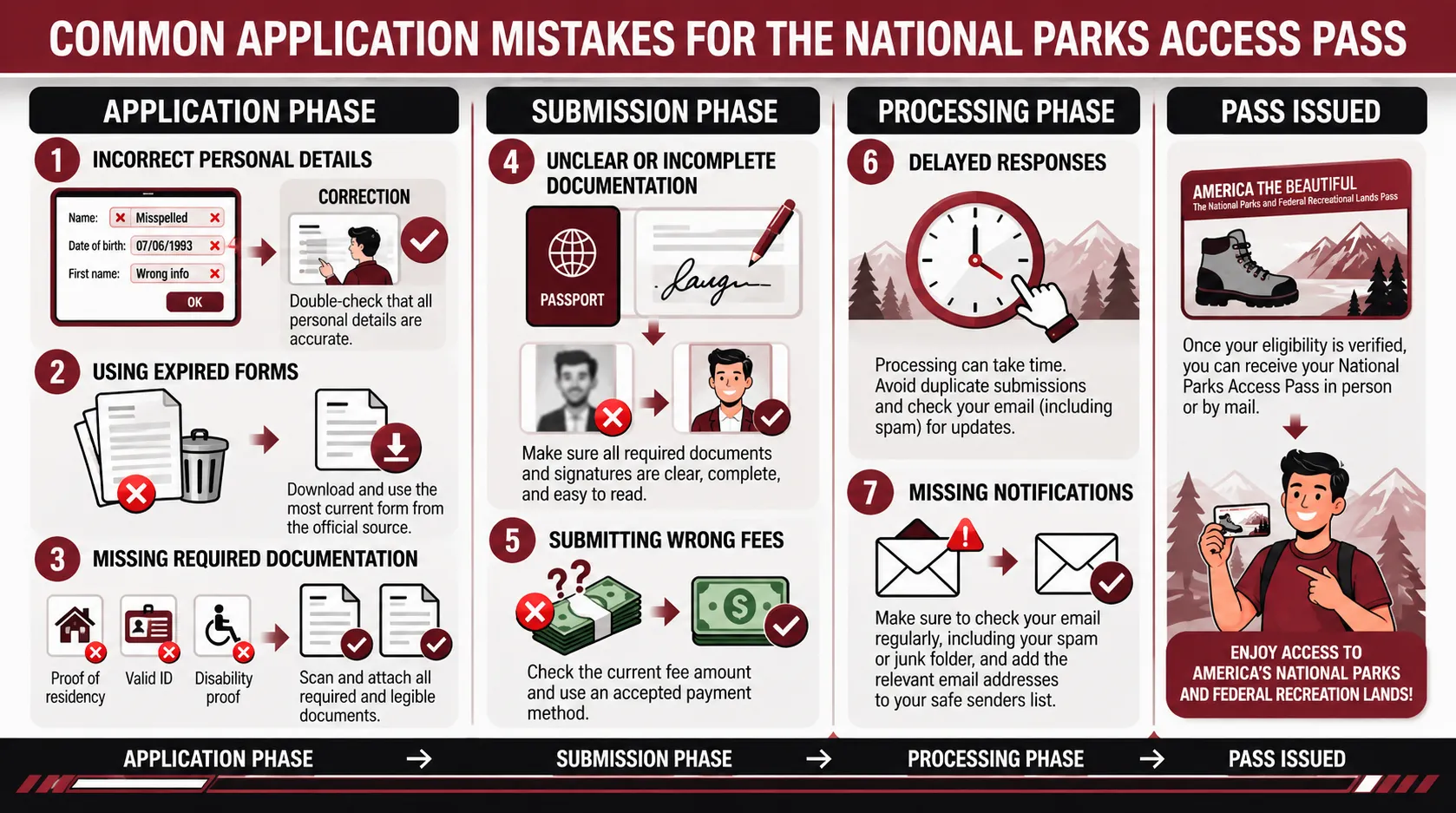
Missing or bad documentation delays or denies your Access Pass. Your documents must meet all eligibility rules. You can avoid these errors by understanding what agencies look for and preparing your documents correctly.
Insufficient or Unclear Medical Documentation
The most common rejection happens when medical documentation fails to establish permanent disability status. Your paperwork must clearly state that your condition substantially limits major life activities. Your paperwork must show that your disability will last for life.
According to the eligibility verification guidance, vague statements like “patient has mobility issues” won’t qualify. Instead, your doctor must specify the diagnosis, how it limits daily function, and that it’s permanent. For example, documentation should read “patient has diabetic peripheral neuropathy causing severe mobility limitation, expected to be permanent.”
Many applicants assume temporary disability qualifies. It doesn’t. The pass requires permanent status under federal law. Short-term injuries or conditions that may improve don’t meet the threshold.
Incorrect Application Submission Method
Applicants often submit to the wrong agency or use outdated forms from unofficial websites. This wastes weeks and delays your access to parks. Always use the official USGS Store website or visit a staffed federal recreation site in person.
Downloading forms from random search results creates problems. These forms may be obsolete or formatted incorrectly. Stick to government sources. The official channels process applications faster and reduce rejection risk.
Missing Required Identification
Failing to bring photo ID to in-person applications results in the inability to issue the pass that day. You must present government-issued identification that matches your medical documentation. Acceptable forms include a driver’s license, state-issued ID, or U.S. passport.
Some applicants bring medical records but forget their ID. Others bring expired identification. Both situations prevent same-day issuance. Double-check your ID expiration date before visiting a federal site. Bring both your medical documentation and current photo ID to complete the process in one visit.
How Rocket Records Simplifies Access Pass Applications
Getting your National Parks Access Pass should be simple. But the process often feels confusing. You need medical documentation, proper forms, and proof of disability. Rocket Records removes these barriers by handling the entire application process for you.
Benefit Eligibility Matching and Review
Rocket Records identifies Access Pass eligibility as part of its 25-plus benefit matching system. The platform reviews your health information to determine whether your condition may qualify. According to the official Access Pass requirements, permanent disability documentation must show your condition limits major life activities.
The system checks your chronic conditions against Access Pass permanent disability requirements. Rocket Records users have verified Access Pass eligibility through the platform. The matching process takes less than five minutes to complete.
Medical Documentation Assistance
Proper disability verification letters can be hard to get. Many doctors don’t know the specific format federal agencies require. Rocket Records connects users with licensed physicians who provide properly formatted disability verification letters.
These physicians understand what the National Park Service needs to see. They review your medical history and current condition. Then they create documentation that meets federal standards. This saves you multiple doctor visits and phone calls.
Application Guidance and Support
Once your documentation is ready, Rocket Records prepares all required forms. The service provides step-by-step application instructions specific to your situation. You receive application guidance and support throughout the process.
The platform is HIPAA-compliant and protects all medical information with bank-level encryption. Your health data stays secure at every step. NPS or the appropriate issuing federal agency makes the final determination on Access Pass applications. But Rocket Records makes sure your application is complete and accurate before submission.
Conclusion
You now know how to get your National Parks Access Pass. The process is simple when you follow the right steps. Start by gathering your medical documentation that proves permanent disability status. Then choose between an in-person application for same-day issuance or a mail application through USGS.
Your pass opens access to over 2,000 federal sites nationwide. It covers entrance fees and cuts camping costs by 50%. That adds up to real savings every time you visit.
Missing or outdated documents can delay your application. They can also get your application denied. You can avoid these mistakes by using current forms and complete medical proof. Double-check your ID matches your documentation before you submit.
If you have a permanent disability that severely limits one or more major life activities, you may qualify. Don’t miss out on this benefit and others you may not know about. Take the free eligibility check at Rocket Records to discover what programs match your health status. We’ll help you apply for your National Parks Access Pass and show you how to claim thousands in other benefits today.





 Ask ChatGPT
 Ask Claude
 Ask Perplexity